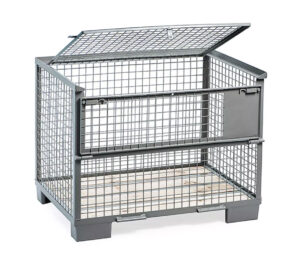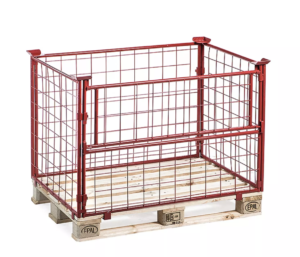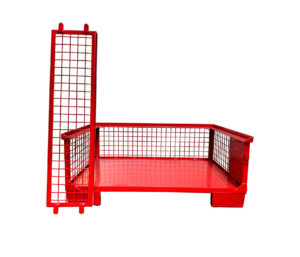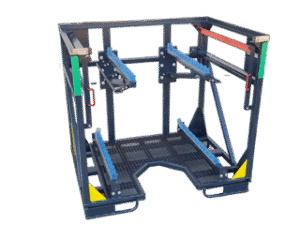


The strength of the mesh container is it Gitterbox, Whether pallet collars depends on its weakest link. In many cases, this is precisely joint, i.e. the place where the elements of the steel structure are connected.
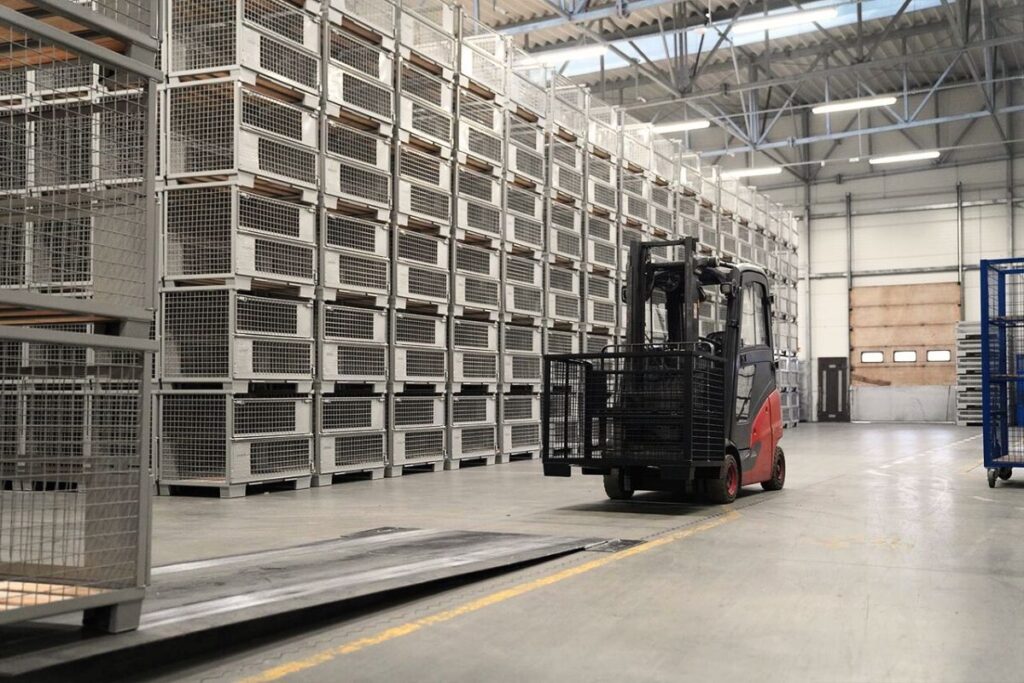
In warehouses and logistics, containers operate under heavy loads. A standard mesh basket can carry up to 1500 kg of cargo, and in addition it is often stacked in several layers. In such a situation, a crack in one weld can lead to destabilization of the entire stack and, in extreme cases, to a serious accident.
Therefore, weld quality control is not an unnecessary formality or bureaucracy. It is one of the key elements employee safety and supply chain stability.
Visual assessment (VT) – what to look for with the naked eye?
One of the basic methods of weld quality control is Visual Testing (VT). It involves assessing the weld without the use of specialized equipment; good lighting and a careful look are sufficient.
Although it does not replace laboratory testing, it allows for the quick detection of many typical defects.
Cracks and porosity
Visible cracks or fine pores in the weld structure indicate a weak material bond. Such areas are particularly susceptible to further damage under load.
Flooding
Undercuts are characteristic grooves running along a weld. They form when the material has been over-melted. As a result, the material's cross-section is weakened, reducing the structural strength.
Weld spatter
Small "dots" of metal around the weld indicate a sloppy welding process. Besides being aesthetically pleasing, they also make subsequent welding more difficult. powder coating or galvanizing, which accelerates the corrosion process.
No melting
One of the most dangerous defects, it occurs when the material is not properly bonded deep into the weld. While the weld may appear good on the outside, its strength is significantly lower than expected.
Aesthetics vs. durability – is a nice weld a good weld?
You often hear the opinion that the appearance of a weld doesn't matter; only its strength counts. This isn't entirely true.
Of course aesthetics alone do not guarantee quality, however, the regular and smooth weld line of the so-called. welding shell usually indicates a stable welding process.
An even structure indicates that the welder maintained the correct parameters or that the process was carried out by a welding robot.
Irregular welds, on the other hand, with a large amount of spatter or a "ragged" structure, should be a warning sign. In many cases, they indicate a lack of process repeatability and an increased risk of defects.
Manual vs. Robotic Welding – Why Does Technology Matter?
The quality of the weld depends not only on the skills of the welder, but also on the technology used.
Manual welding
The traditional welding method is highly dependent on the human factor.
The quality of the weld is influenced by, among others:
- operator fatigue,
- variable pace of work,
- differences in parameter settings.
As a result, even within a single batch of products, differences in the quality of welds may appear.
Robotic welding is standard at Dajano
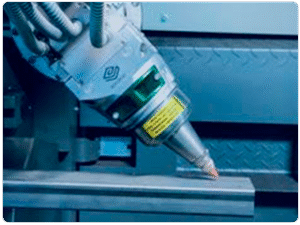
In the company Dajano we use welding robots, which ensure full repeatability of the process.
The robot maintains constant welding parameters such as current, speed and weld geometry, so that each production element is identical.
This means that in a batch of 1000 gitterboxes each of them has the same strength and quality of connections.
Standards and certificates (ISO, UIC)
The quality of welds in logistic structures is not a matter of discretion and is regulated by specific standards.
In the case of mesh baskets, the following are of key importance:
- UIC 435-3 – a standard specifying the requirements for gitterboxes,
- PN-EN ISO 5817 – standard regarding the quality of welds in welded structures.
For the customer, this means one thing - by purchasing a certified product, they can be sure that the welds have passed quality control and meet safety requirements.
Dajano quality: Precision confirmed by 30 years of experience
It was given Metal Processing Competence Center, which has been designing and manufacturing solutions for logistics and industry for over 30 years.
In our plants:
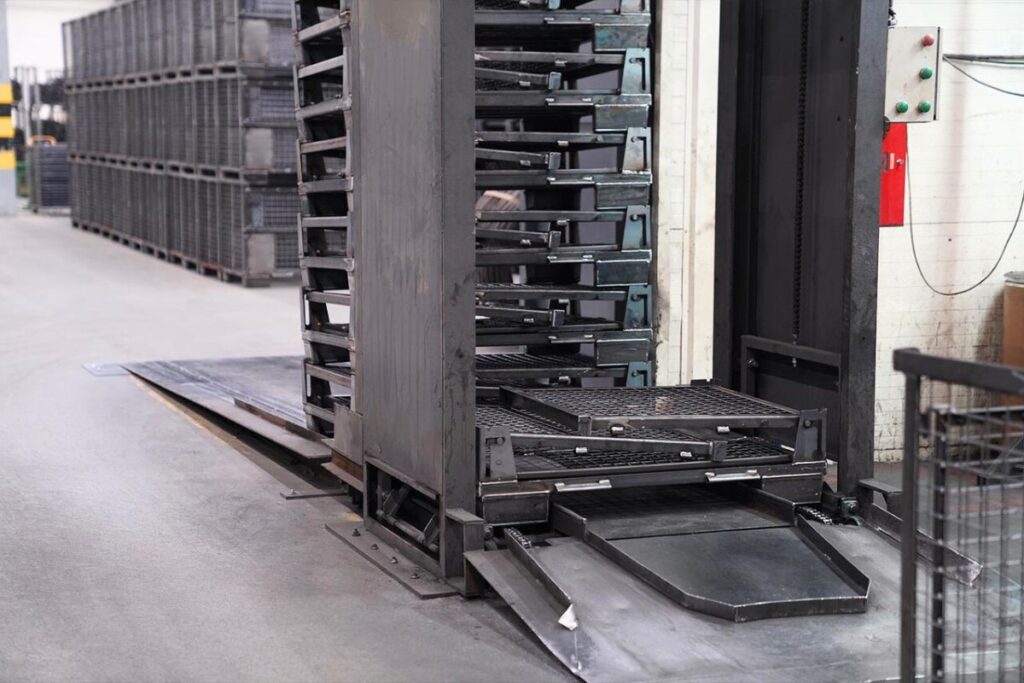
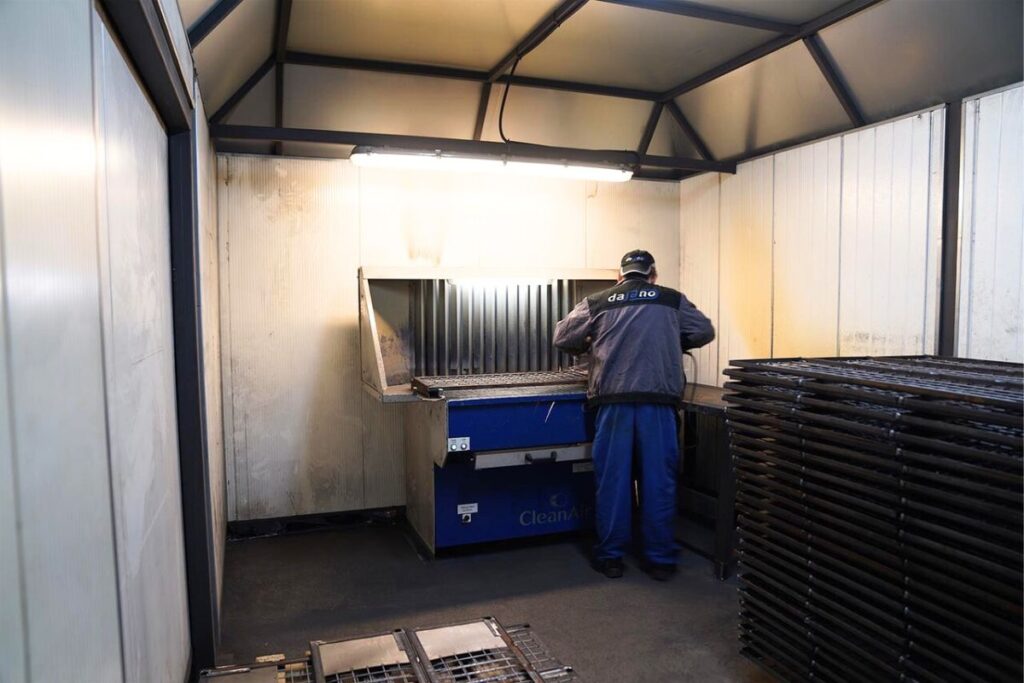
- each stage of production is covered quality control,
- we use robotic welding processes,
- We design structures with the following in mind: dynamic transport loads.
Our mesh containers and pallet collars are not only designed as warehouse equipment, but also as safe logistics carriers, which are expected to work for many years.
A solid weld also means lower TCO (Total Cost of Ownership) fewer repairs, fewer replacements and longer container life.
Consult us about your logistics needs.
Summary: Don't take any chances! Choose proven quality.
Assessing the quality of welds isn't always easy for someone without technological experience. Therefore, the safest strategy is to choose a manufacturer that has the appropriate technologies, standards, and quality procedures.
In logistics the cheapest solutions often turn out to be the most expensive, when damage to goods or an accident occurs.
If you would like to see how our mesh containers and pallet collars are made, visit the Dajano website or contact our technical advisor.
How helpful was the article?
Click a star to rate!
Average rating 5 / 5. Number of votes: 1
No votes so far! Be the first to rate this article.
 Polski
  English (UK)
  Français
  Čeština
  Svenska