

In agriculture, efficient harvesting and proper storage of crops are elements that can determine the profitability of the season. Agricultural baskets (metal, mesh, folding) are increasingly becoming the solution of choice - providing protection, ventilation and ease of transport. In this article, we will discuss why you should use the right baskets, what features they should have, where Gitterboxes perform well on the farm, when to invest in bespoke baskets, and we will also cover the Dajano range and FAQs.
Why are proper baskets crucial in agriculture?
Baskets and harvesting efficiency and reduced yield losses
Inadequately sized containers lead to waste: fruit and vegetables can get dinged, squashed and rot in areas without ventilation. Using robust agricultural baskets allows:
- maintain the integrity of the crop during loading and transport,
- reduce waste and mould,
- optimise the harvesting process - workers fill the bins faster, fewer transfers.
Safe transport of fruit and vegetables from field to store
After harvesting, the crop must be taken to a warehouse or cold store. Then the baskets must:
- protect the load when driving over uneven terrain,
- provide for stability and allow for fastening (e.g. transport straps),
- be compatible with transport machinery (orchard machinery, trailers, trolleys) - lower profiles or fork openings, stable walls.
Good baskets minimise shocks, load shifting and the risk of mechanical damage during transport.
What features should a good farmer's bin have?
Durable construction and resistance to external conditions
The farm basket must be weatherproof - rain, UV radiation, contact with moisture and soil. Therefore, the following are important:
- steel construction, often galvanised or powder-coated,
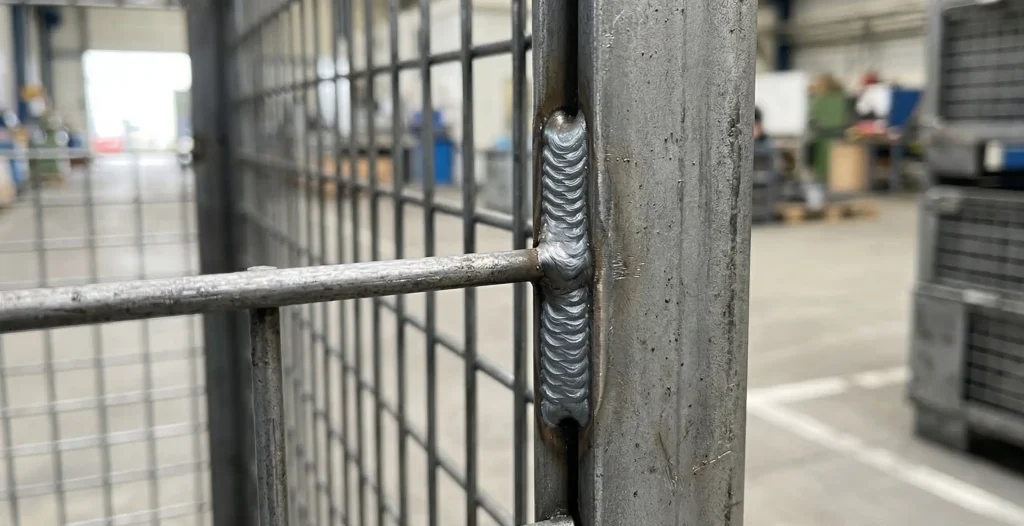
- Robust, corrosion-resistant welds,
- spare parts, corner reinforcements, additional angles.
Stackable, foldable and easy to load
In practice, bins should:
- be stackable, i.e. stacked or piled (when full),
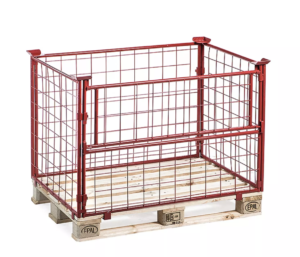
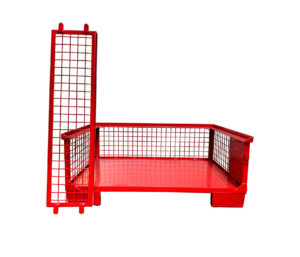
- folded, to take up less space when empty,
- have a front flap or door for easy loading or emptying, especially when stacked.
Mesh - ventilation and crop freshness
Openwork walls of baskets (mesh or perforated) are key when storing fruit and vegetables:
- provide airflow, which reduces moisture and mould,
- enable rapid cooling (or temperature maintenance),
- transparency and the ability to visually inspect the contents.
However, the mesh needs to be adjusted - too large can cause small products to fall out, too small can restrict ventilation and increase the cost of the structure.
Where are Gitterboxes used on the farm?
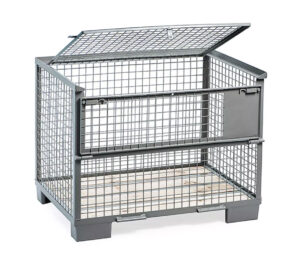
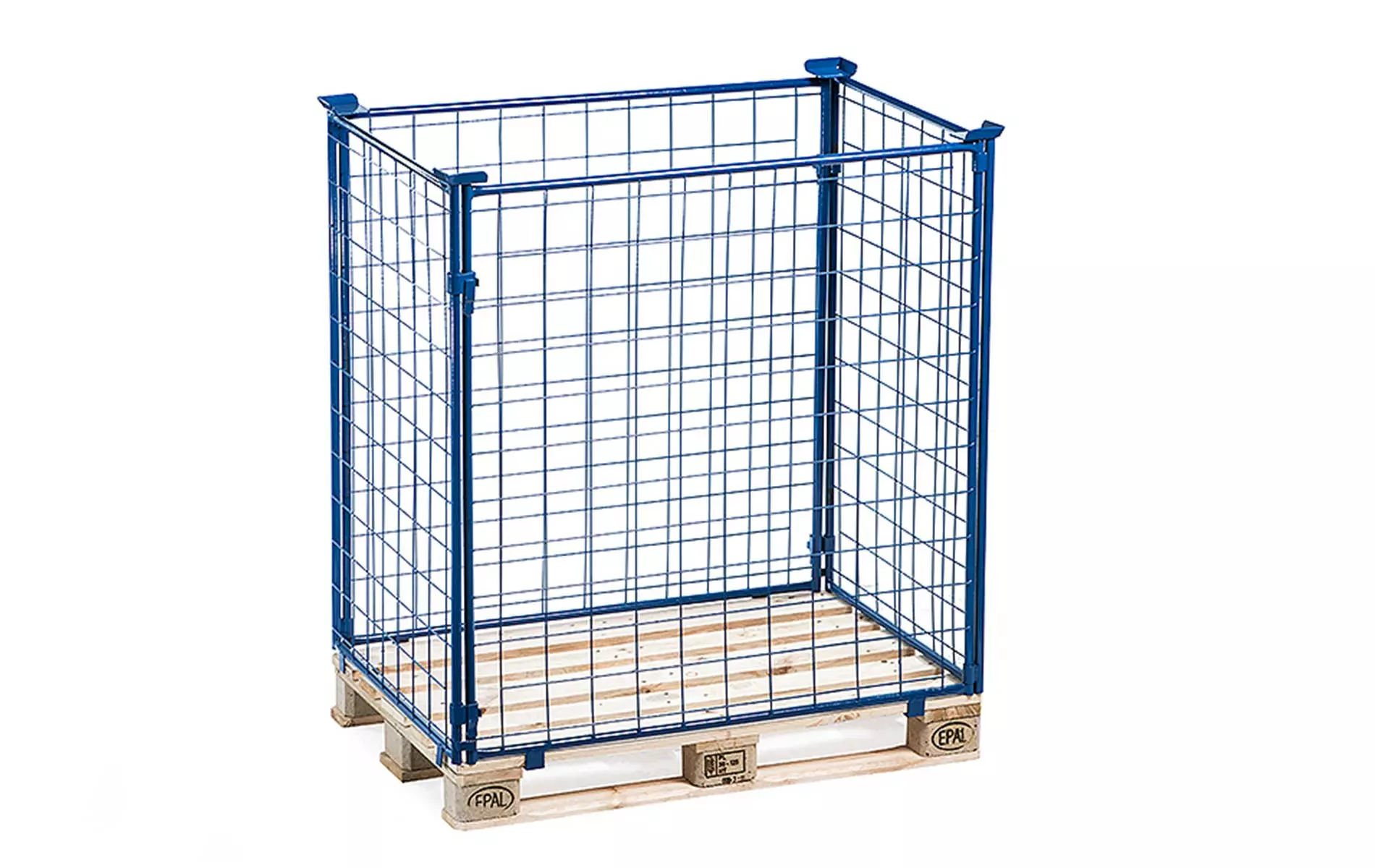
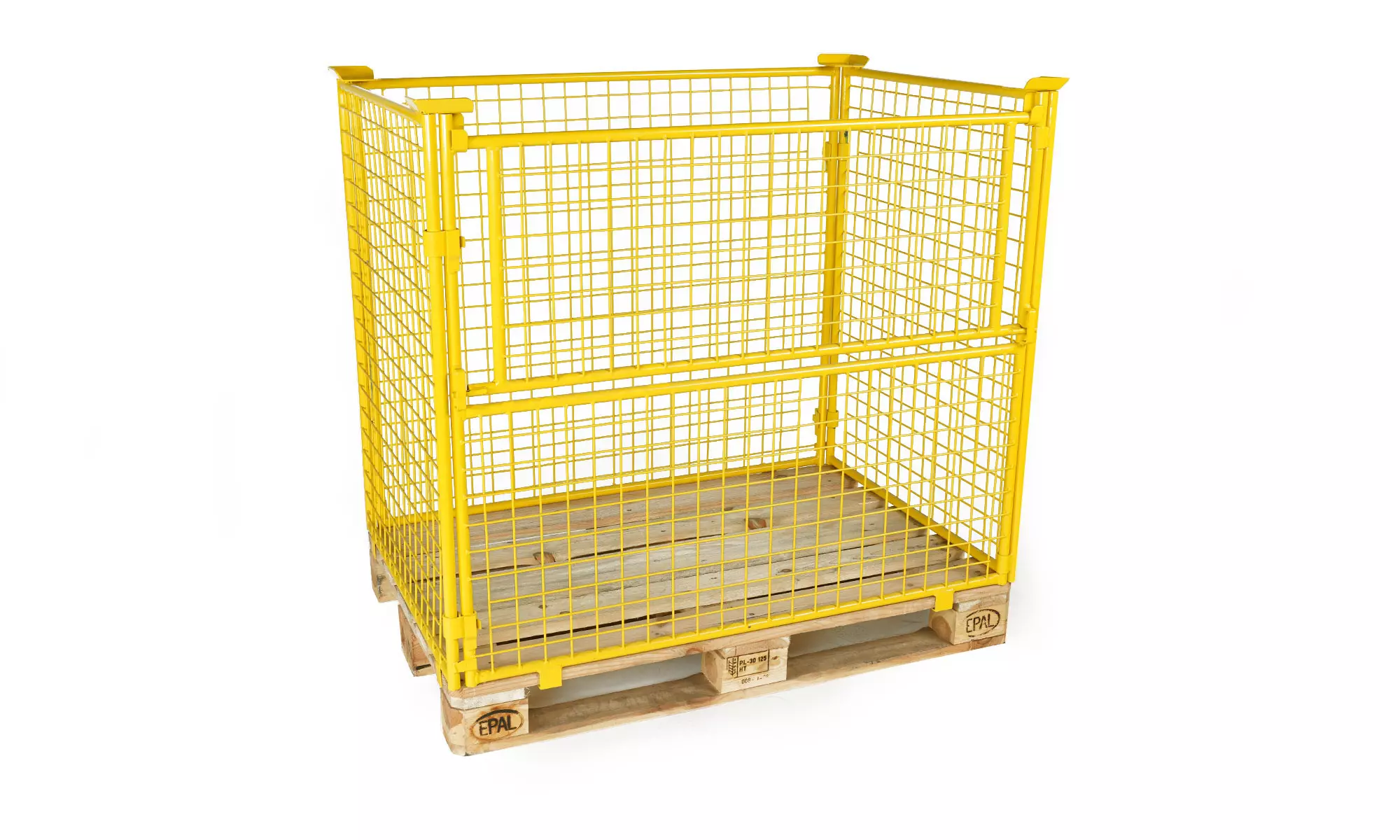
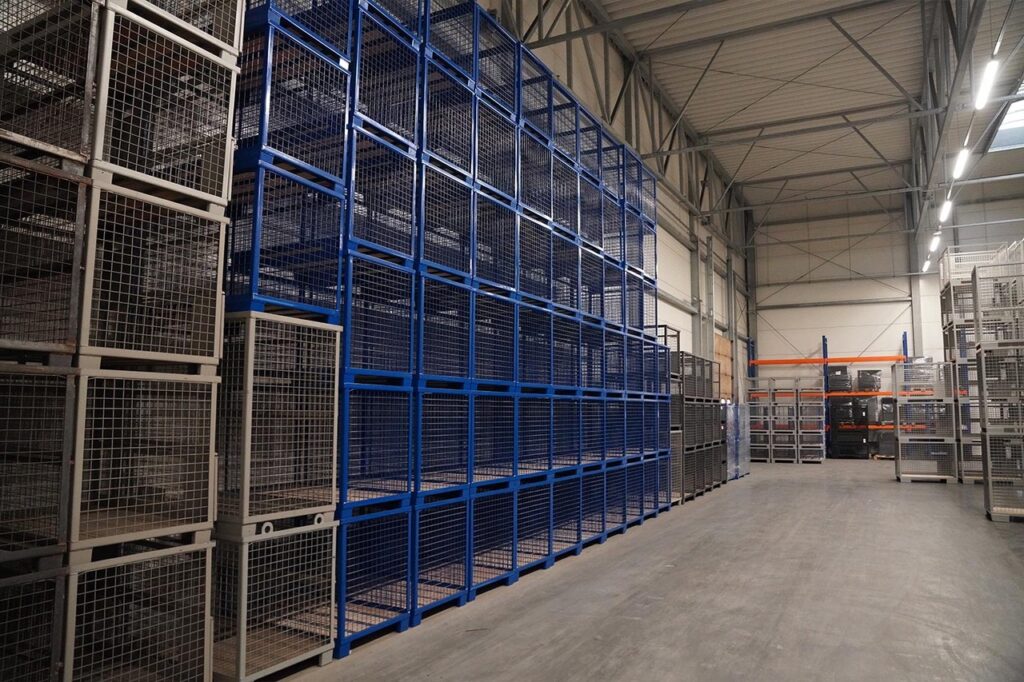
Gitterboxes - High-capacity steel mesh baskets - increasingly used in agriculture for their strength and versatility.
Harvest and transport of seasonal crops
During the harvest season, Gitterbox baskets can be used for:
- transport of carrots, potatoes, beetroot, onions - in controlled batches,
- transporting fruit - apples, pears - when security, stability and ventilation are required.
Temporary storage and sorting of vegetables
On farms, there is often a need to store crops briefly before onward transportation. Gitterboxes and mesh baskets are well suited:
- as sorting baskets in sorting lines,
- as storage containers in the field, close to sorting or production stations - thanks to their resistance to external conditions.
Working with agricultural machinery and forklift trucks
Gitterbox baskets usually have a design that is compatible with storage systems:
- The lower profiles allow the forks of a forklift truck to be used,
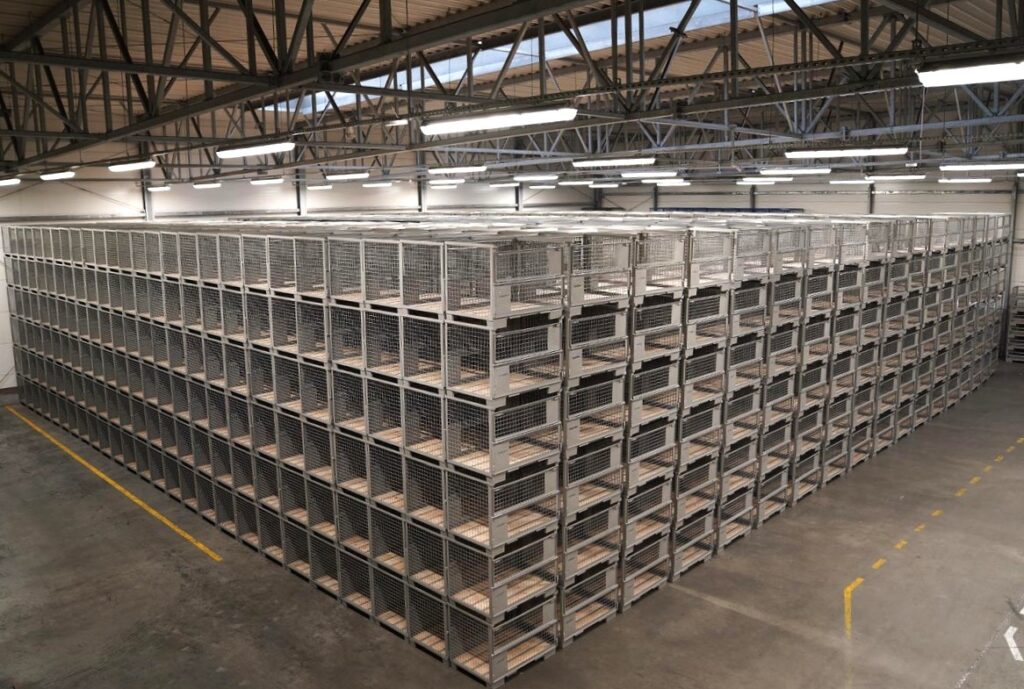
- stackable with simultaneous operation from the front (front flaps) - enabling operations without unloading from above
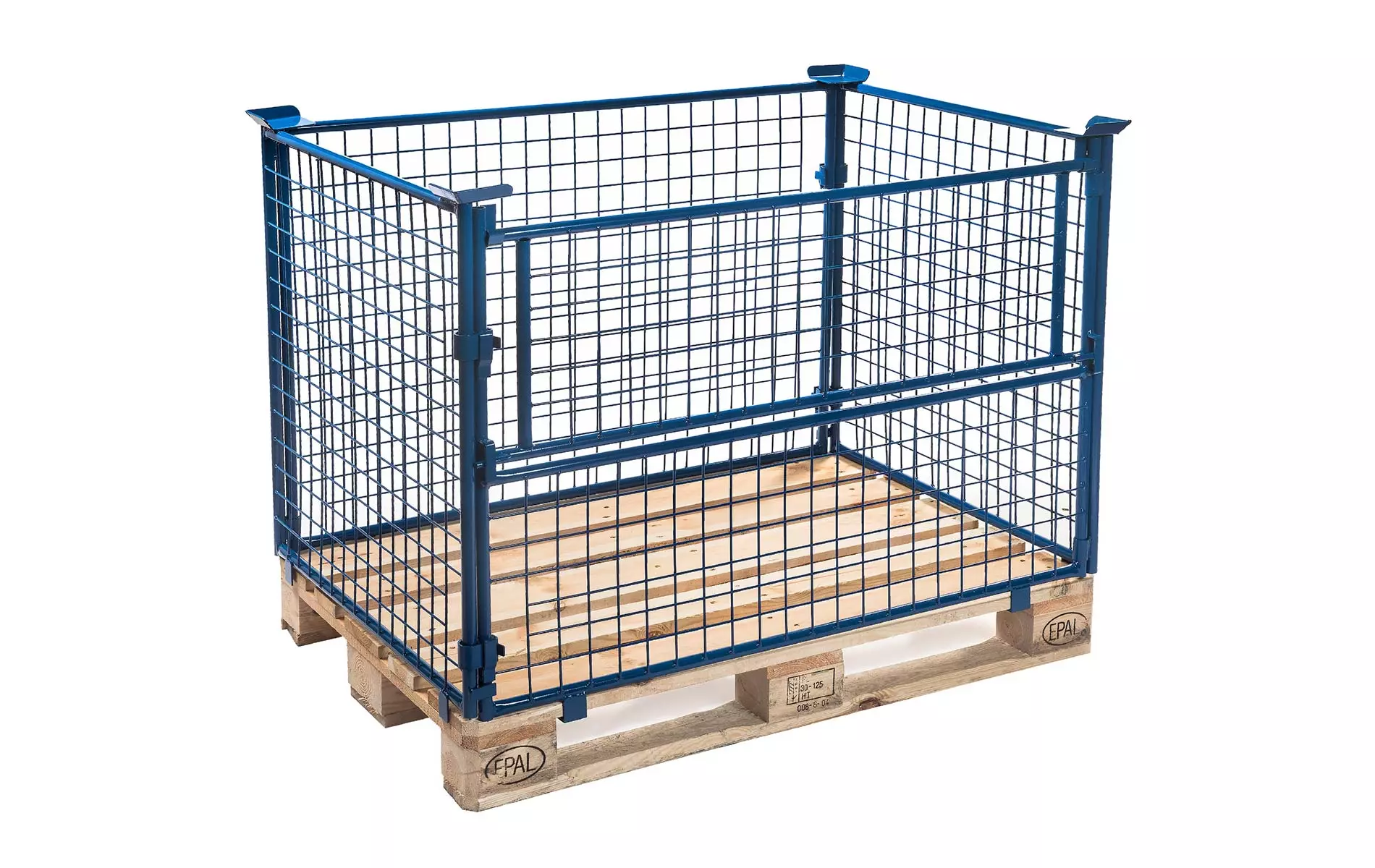
- standardised dimensions (e.g. 1200×800×970 mm) with a load capacity of several hundred to over 1,000 kg. In the market offer, the standard Gitterbox 124 × 84 × 97 cm has a weight of approximately 70 kg and stackability of 4 pieces
Is it worth investing in bespoke agricultural baskets?
Definitely yes - especially in situations where standard containers do not meet all the requirements of the farm.
It is worth ordering bins made to measure when:
- You grow vegetables or fruit with unusual dimensions and standard baskets are too shallow, too narrow or too small.
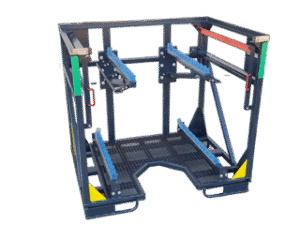
- You need a structure with additional elements, such as flaps, hooks, carrying handles, feet or special openings.
- Higher load capacity required or use of materials resistant to specific conditions (e.g. moisture, chemicals, high temperatures).
- Want to optimise logistics - e.g. folding or stackable baskets, which reduce the cost of transporting empty units.
- You care about labelling, numbering, colours or logos, which will facilitate sorting, identification and organisation of work.
- You have automated sorting or transport lines and you need containers that perfectly match the dimensions of the systems.
By ordering bins made to measure, you are assured that every element of the design will be tailored to your real needs - which translates into higher productivity, less crop loss and space saving in storage and transport.
For which industries and crops do agricultural baskets work best?
Vegetables: potatoes, onions, carrots, cabbages, beets, celery
Roots and tubers are often transported in layers - baskets with perforated or openwork walls ensure good ventilation and the elimination of excess moisture. Stackable and collapsible designs are useful when transporting empty units.
Fruit-growing: apples, pears, plums
Fruit is sensitive to pressure and trauma. Baskets must provide stability, limit movement inside and allow ventilation. Protective inserts, cushioning mats and front flaps are often used.
Organic farming and crop processing
In organic farms, hygienic aspects are important: ease of cleaning, corrosion resistance, use of materials approved for food contact. Baskets must be designed for clean production processes, without difficult corners.
Agricultural baskets in the Dajano range
Standard and individual production
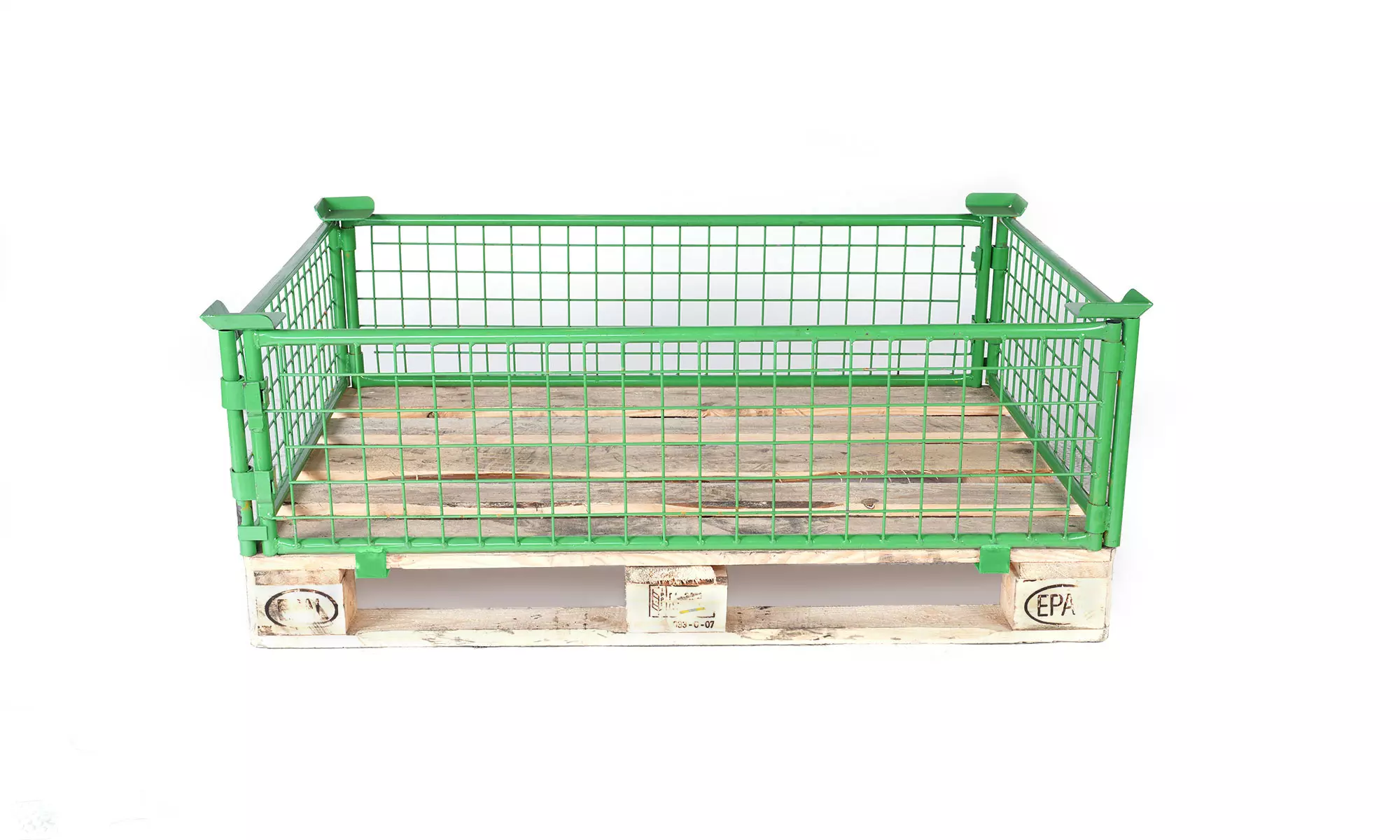
Dajano offers both ready-made mesh baskets/Gitterboxes and the possibility of custom-made agricultural baskets with tailored dimensions, materials and functionalities. The range includes moisture-resistant, easy-to-clean agricultural bins with fine mesh to minimise damage to vegetables and fruit
Fast lead times and transport to the customer
The company places an emphasis on punctuality - production orders are fulfilled efficiently and baskets are delivered directly to the farm. Logistics solutions include packaging and transport security.
Certificates of quality and durability of materials
The agricultural bins offered by Dajano are designed taking into account quality standards, the use of materials with proven resistance and corrosion protection (e.g. zinc, powder coating). The range also includes bins with fine mesh to minimise crop damage and provide ventilation
Agricultural baskets - Frequently asked questions
What are the standard dimensions of agricultural baskets?
Popular dimensions for gitterbox baskets are 1200 × 800 × 970 mm (or similar variants) - but manufacturers offer many variations and variants. An example of a 124 × 84 × 97 cm basket is typical in market offerings.
Are the mesh baskets stackable and collapsible?
Yes - many Gitterbox and mesh basket designs allow stacking, thanks to their stable construction. Also the folding versions (folding walls or removable walls) allow empty baskets to be reduced in volume and save space.
Are agricultural baskets moisture and weather resistant?
Yes - properly protected baskets (galvanised, powder-coated, with anti-corrosion coatings) are suitable for outdoor use, exposure to moisture, varying temperatures or soil. Offers often include corrosion resistance and ease of cleaning.
Does Dajano make bespoke agricultural baskets?
Yes - Dajano offers the production of agricultural baskets tailored to the customer's specifications: dimensions, load capacity, design, type of netting or accessories. It is possible to obtain baskets perfectly adapted to a specific farm and type of crop
How long does it take to complete an order for baskets?
Turnaround time depends on the complexity of the structure, size of the order, availability of materials and production load. In typical cases, standard orders are fulfilled within a few weeks - but the deadline may change for non-standard constructions or seasonal increases in orders.
📞 Contact us - We will advise you on the best agricultural baskets for your farm!
How helpful was the article?
Click a star to rate!
Average rating 5 / 5. Number of votes: 2
No votes so far! Be the first to rate this article.
How helpful was the article?
Click a star to rate!
Average rating 5 / 5. Number of votes: 2
No votes so far! Be the first to rate this article.
 Polski
  English (UK)
  Français
  Čeština
  Svenska