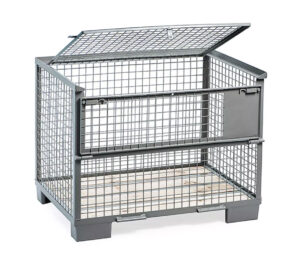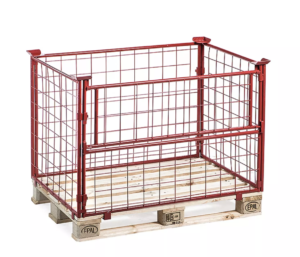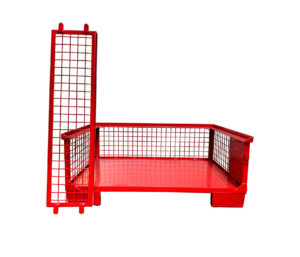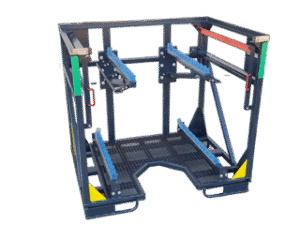


We have the perfect solution to make better use of your existing space rather than building another warehouse space.
Before you decide to expand your warehouse, check how much space you can regain with simple organizational changes. Most warehouses lack the potential for storage height and reverse logistics.
Two methods that give immediate results are:
- stacking gitterboxes,
- use of foldable containers.
This is a fast and scalable form of warehouse optimization – without costly construction investments.
Stacking gitterboxes – how to safely build a vertical warehouse?
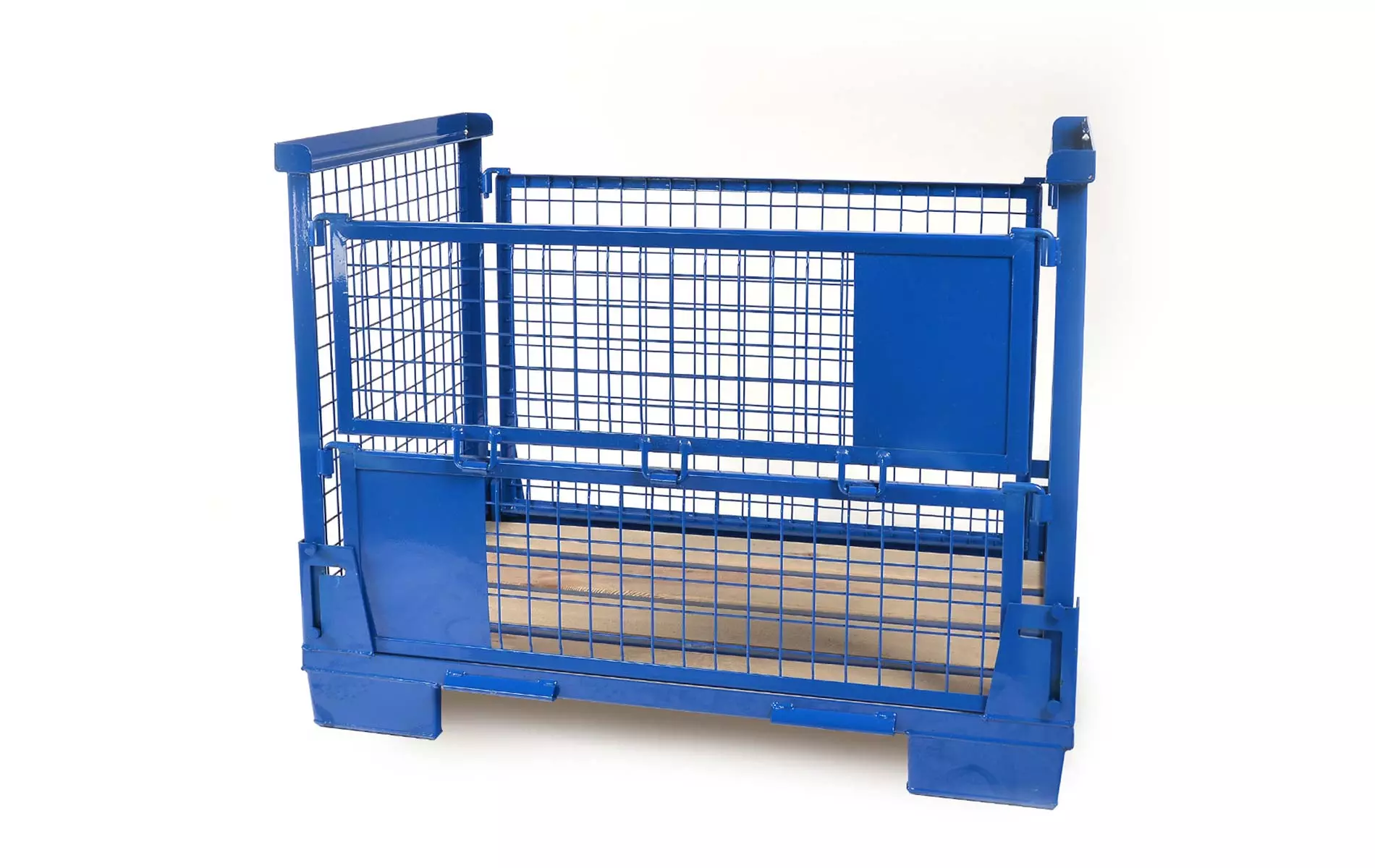
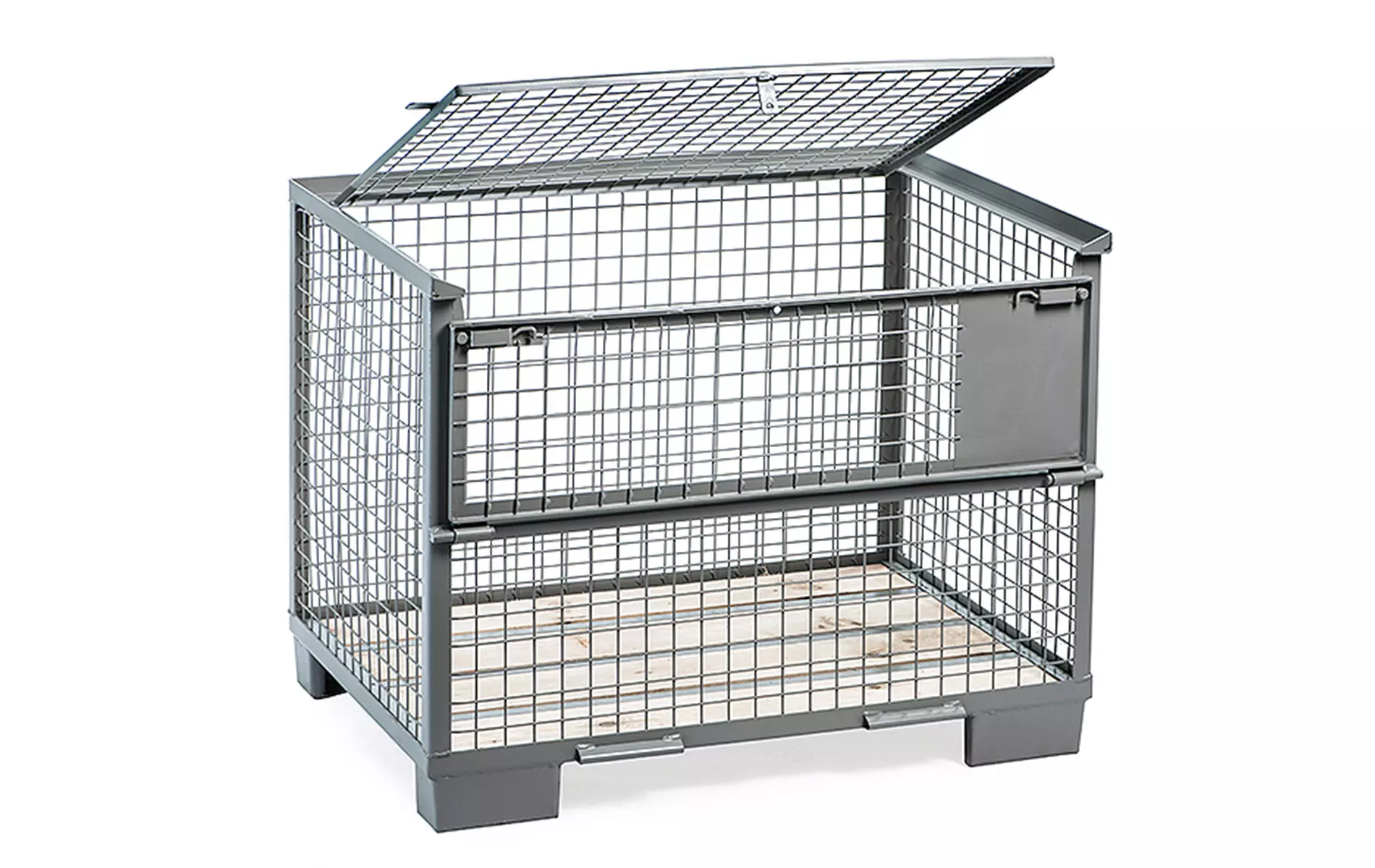
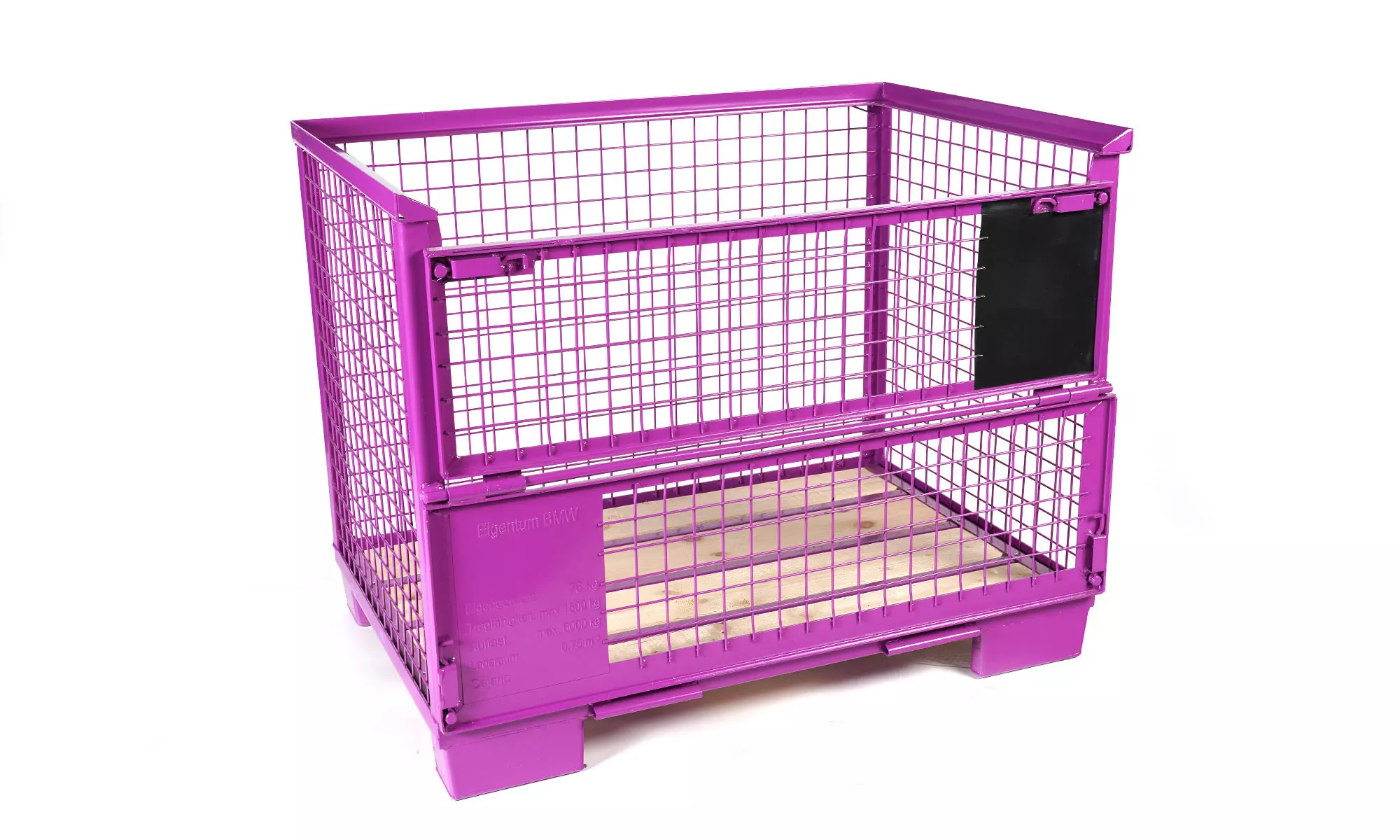
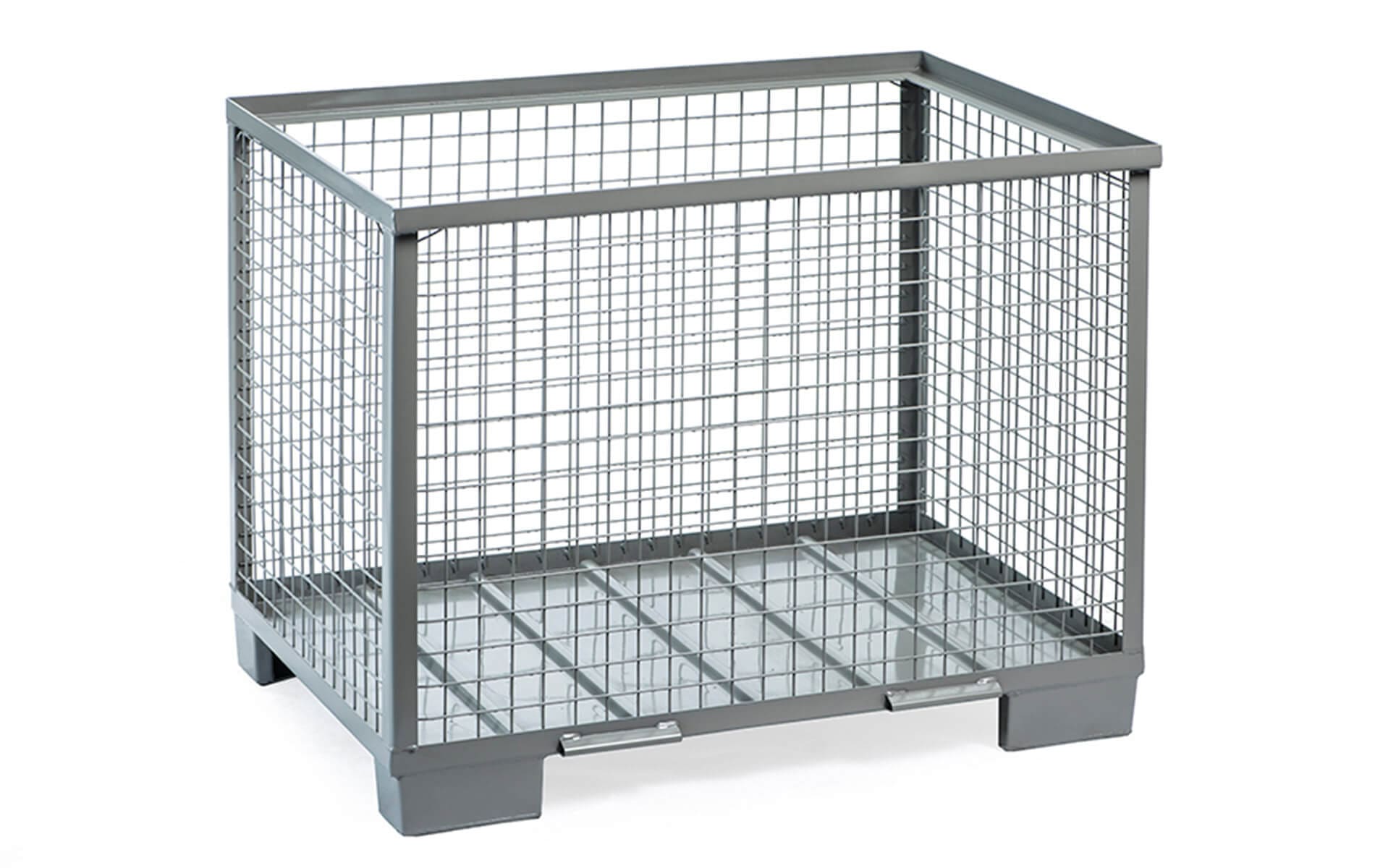
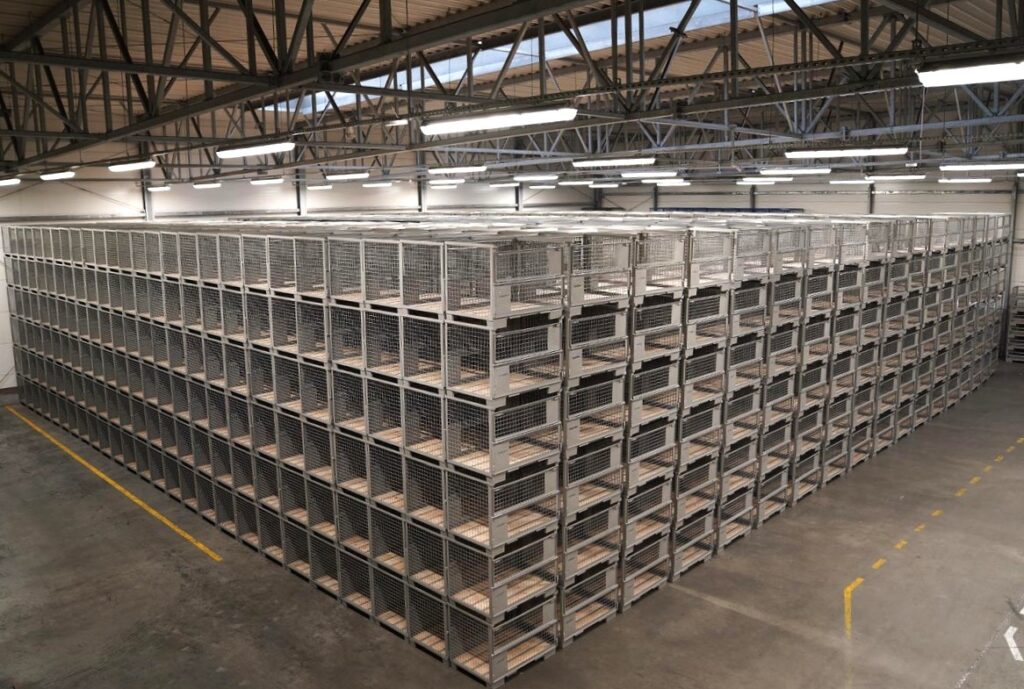
If your gitterboxes stand alone on the floor, you're wasting actual cubic meters of storage space. Mesh baskets are designed with stacking in mind.
Thanks to the system sockets and legs it is possible to place one basket on top of another stably. In practice, this means building posts in a configuration 1+3 or 1+4 – without having to invest in pallet racking.
Benefits?
- larger storage capacity,
- better organization of buffer zones,
- no interference with infrastructure,
- quick implementation without downtime.
This is the easiest way to start „storing vertically.”.
How much space will you gain? The mathematics of stacking
Warehouse optimization must be based on numbers.
A standard gitterbox has a base of approximately 1240 × 835 mm – i.e. it takes up the space of one euro pallet. With a permissible load of 1500 kg per unit, it is possible to stack up to four layers.
This even means 6000 kg of goods on the surface of one pallet.
The Space Utilization meter increases immediately:
- less occupied floor space,
- greater throughput,
- higher efficiency without additional square meters.
Instead of increasing your warehouse, you increase its efficiency.
Collapsible containers – no more air storage
The second area where companies lose money is the reverse logistics of empty packaging.
Traditional containers take up the same amount of space empty as full. In effect, you're transporting and storing... air.
Folding containers solve this problem. After emptying, they reduce their volume by up to 70–80%.
Operational effect:
- more empty containers in one transport,
- lower fuel and freight costs,
- less space taken up in the buffer warehouse,
- more efficient reverse logistics.
In closed-loop systems, this is a real annual saving, not a cosmetic change.
Gitterbox vs. foldable container – what to choose for your product?
There's no one-size-fits-all solution. The choice should be based on the nature of the product and process.
Choose gitterboxes if:
- you work with heavy metal elements,
- you need high load capacity,
- you operate in the automotive or industrial sector,
- what counts is durability for years.
Choose collapsible containers if:
- you transport lighter general cargo,
- you operate in an industry that requires hygiene,
- you have frequent returns of packaging,
- you want to reduce the costs of transporting empty units.
In practice, the best results are achieved a combination of both methods – stacking full baskets and folding empty ones.
Safety rules for stacking (DIN and health and safety standards)
Warehouse optimization cannot come at the expense of security.
Before stacking the baskets, you should:
- check for cracks and damage to welds,
- make sure the posts are straight,
- do not exceed the permissible load,
- always place the heaviest loads at the bottom.
Regular technical inspection of baskets is the basis for stable and safe stacks.
➡️ Gitterboxes
Frequently Asked Questions (FAQ) about space optimization
Do gitterboxes need to be fastened together when stacking?
In static storage, while maintaining technical parameters – usually not.
Is a 4-layer stack stable?
Yes, provided the load-bearing capacity is maintained and the load is even.
Do foldable containers actually reduce transport costs?
Yes – reducing the volume by 70–80% translates into fewer trips.
Is it worth combining both systems?
Yes. This is the most effective model for organizing space and reverse logistics.
Summary – the cheapest form of warehouse optimization
Before you invest in a new hall, check how much you can gain thanks to:
- stacking full gitterboxes,
- assembling empty containers.
This is one of the most cost-effective forms of warehouse optimization – quick to implement, scalable and based on real numbers.
If you want to calculate the potential savings in your warehouse, contact the team Dajano. We'll select the right media and show you how to utilize your space in the 100%.
How helpful was the article?
Click a star to rate!
Average rating 5 / 5. Number of votes: 4
No votes so far! Be the first to rate this article.
How helpful was the article?
Click a star to rate!
Average rating 5 / 5. Number of votes: 4
No votes so far! Be the first to rate this article.
 Polski
  English (UK)
  Français
  Čeština
  Svenska