

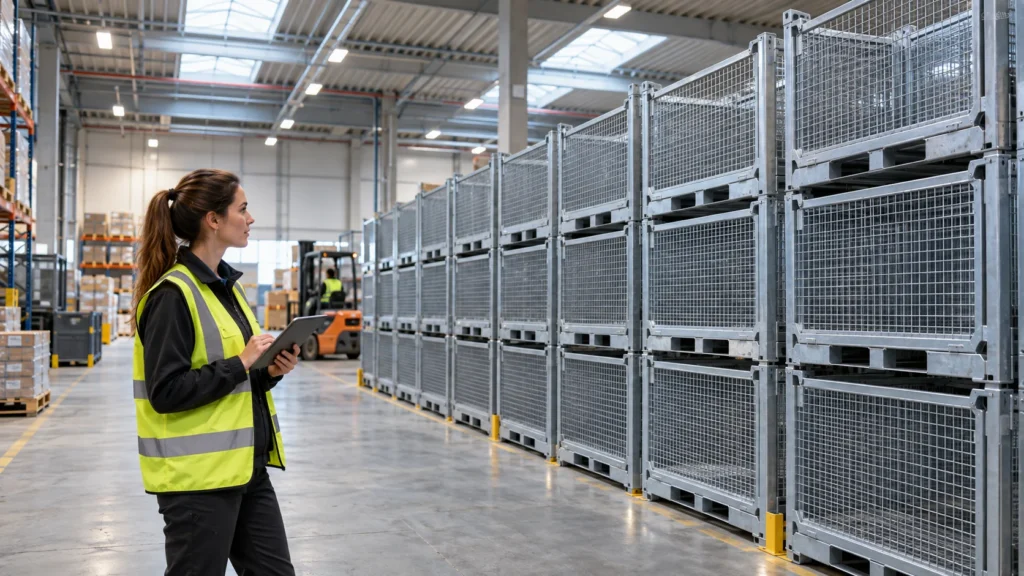
Warehouse logistics and construction site logistics are two completely different working environments. In a warehouse, we typically have a level floor, controlled conditions, and orderly forklift traffic. On a construction site, the situation is completely different.
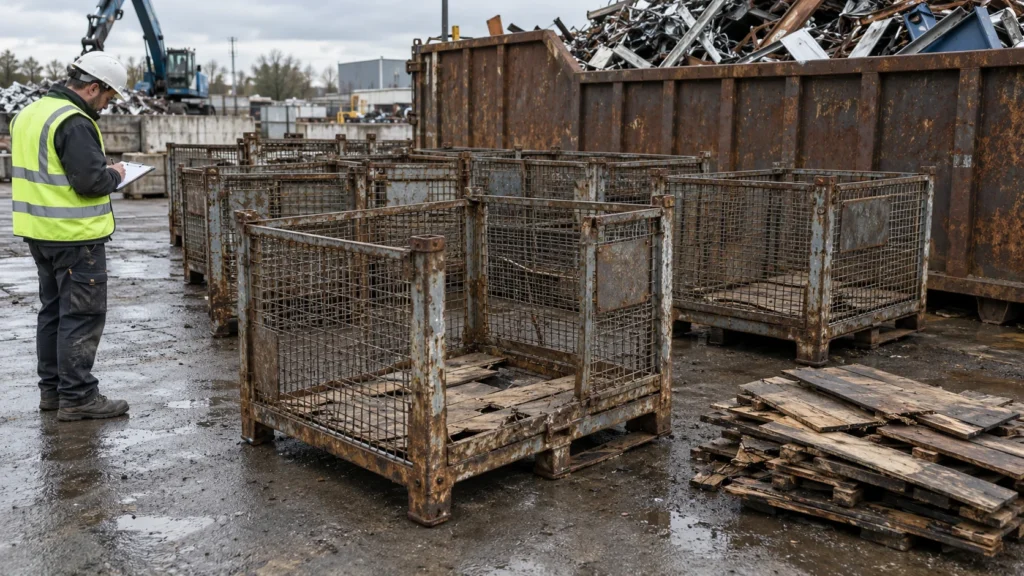
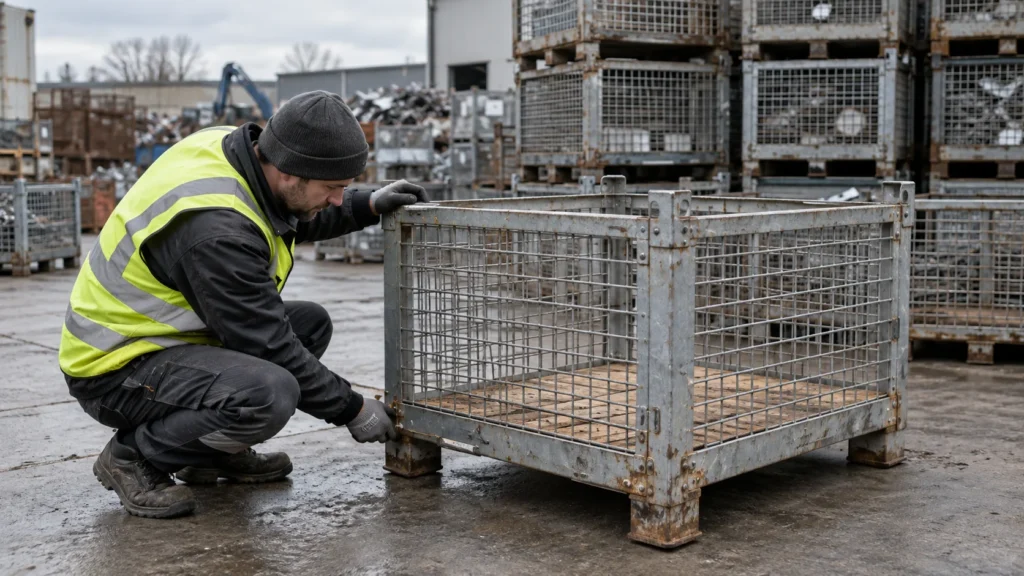
Pojemniki transportowe muszą funkcjonować w znacznie trudniejszych warunkach. Są narażone na mud, moisture, debris, uneven ground and changing weather conditions. Added to this is the intensive use – the baskets are repeatedly moved, dragged across the floor, or transported between floors of the building.
In such conditions, standard storage containers don't always perform well in the long term. A structure that functions well in a logistics facility may wear out more quickly on a construction site.
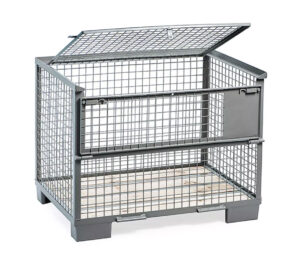
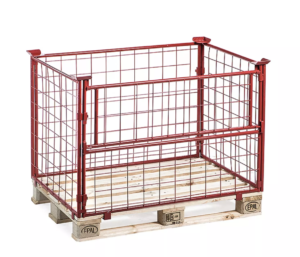
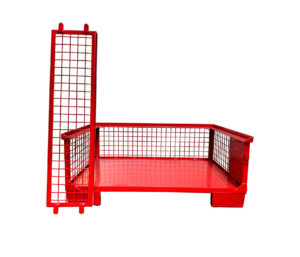
That's why it's so important to properly select logistics carriers for the work environment. A properly designed Gitterbox can reduce losses, increase employee safety, and improve the organization of material transport on the construction site.
Key design and material differences
W przypadku zastosowań budowlanych bardzo rzadko sprawdza się jeden uniwersalny typ pojemnika. Każda inwestycja może mieć inne wymagania logistyczne – od transportu ciężkich elementów stalowych, przez składowanie narzędzi, aż po zbieranie odpadów budowlanych.
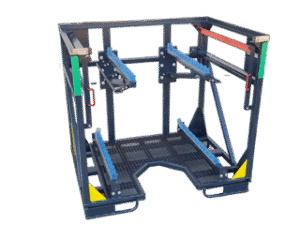
Therefore, containers intended for construction sites are often designed and manufactured to meet specific customer needs. Unlike standard storage gitterboxes, their design can be modified to better cope with harsh working environments.
The most common design solutions include:
- reinforced bottom, which better withstands high point loads and the transport of heavy materials,
- special transport handles (so-called ears) enabling safe lifting of containers using slings and cranes,
- the upper flap is locked with a padlock, allowing you to protect tools or materials against theft,
- different heights of the structure, adapted to the type of transported elements,
- net with larger meshes or other geometry, adapted to the specific nature of the stored materials.
Depending on the operating conditions, containers can also be manufactured with various types of surface protection. They are often used on construction sites. hot-dip galvanized, which significantly increases the resistance of the structure to moisture and atmospheric factors.
The container floor is also an important element of the structure. In addition to classic wooden solutions, composite or technical plastic boards (e.g. HDPE – high density polyethylene). These types of materials are more resistant to moisture, chemicals, and intensive use.
Thanks to the ability to modify their design, construction containers can be much better adapted to real-world working conditions than standard storage solutions. This increases both their durability and safety of use on the construction site.
Anti-corrosion protection – painting vs. hot-dip galvanizing
One of the most important differences between storage gitterboxes and versions intended for outdoor use is the method of surface protection.
In a warehouse environment it is often sufficient powder coating or standard paint coating. It protects the structure against minor mechanical damage and ensures an aesthetic appearance.
On a construction site, the situation is different. Containers are constantly exposed to rain, humidity and variable temperatures. Under such conditions, the steel oxidation process occurs much faster.
Therefore, for outdoor applications, a much better solution is hot-dip galvanized. This process involves immersing the steel structure in liquid zinc, which creates a durable protective layer over the entire metal surface.
Thanks to this, the gitterbox is much more resistant to weather conditions and can be used outdoors for many years without losing its structural properties.
Bottom and wall construction – resistance to point impacts
On construction sites, transport containers often serve as mobile bins for tools and materials. They hold heavy steel components, screws, structural joints, and sometimes construction waste.
In such conditions, standard construction may prove insufficient. Large-mesh netting may become damaged or cause small items to fall out.
Therefore, in versions intended for construction work, the following are often used:
- denser mesh, which prevents small elements from falling out,
- reinforced bottom, e.g. in the form of a full sheet instead of classic boards,
- additional elements stiffening the structure.
Such solutions increase the durability of the container and improve work safety on the construction site.
Mobility and vertical transport – crane vs. forklift
In the warehouse, gitterboxes are mainly transported using forklifts. The design of the standard container is fully adapted to this method of transportation.
However, on construction sites it is very often used vertical transport using cranes. In such cases, the container must meet certain safety requirements.
If the gitterbox is to be raised in height, it should have:
- appropriate strength certificates,
- a structure capable of carrying dynamic loads,
- possible sling handles (ears), if it is a modified version to work with slings.
Using containers that are not suitable for crane transport can pose a serious risk to workers below and to the materials being transported.
Dajano production flexibility – tailor-made solutions
In many construction projects, standard logistics containers don't always meet the actual needs of the project. Therefore, Dajano, as a manufacturer with its own production facilities and over 30 years of industry experience, offers the possibility of containers designed for specific applications.
It is worth emphasizing, however, that non-standard designs are only realized in mass production. The minimum order quantity is usually a batch corresponding to one full transport vehicle. This approach allows us to maintain the efficiency of the production process and stable quality of workmanship.
In the case of individual projects, preparatory elements may also be added to the production cost, such as:
- development of design and technical drawing,
- preparation dedicated production tools,
- adapting the technological line to the production of a given series.
Thanks to this approach, it is possible to create containers that are fully adapted to the specific nature of the customer's work – both in terms of design and strength parameters.
At the same time, each production element is subject to quality control, and the welding process is carried out largely using robotization, which ensures repeatability and high durability of the structure even under heavy loads.
Consult us about your construction logistics needs.
Summary: Invest in durability, not replacement
A construction site is an environment where logistics equipment operates in much harsher conditions than a standard warehouse. Therefore, choosing the right transport container directly impacts work safety and the durability of the equipment.
The apparent saving when purchasing a lighter or improperly secured structure often results in the container wearing out even several times faster.
Therefore, it is worth choosing a solution adapted to real working conditions.
How helpful was the article?
Click a star to rate!
Average rating 5 / 5. Number of votes: 1
No votes so far! Be the first to rate this article.
 Polski
  English (UK)
  Français
  Čeština
  Svenska