

AQAP 2110 CNC machining is a process for precision manufacturing of metal components, performed in strict compliance with the rigorous NATO quality assurance standards (AQAP 2110). In practice, this means an uncompromising combination of the repeatability of numerically controlled machines with an advanced monitoring system, full material traceability (including mill certificates), and stringent control of every production stage, required in the defense industry and dual-use projects.
What does the AQAP 2110 standard mean in the defense industry?
AQAP 2110 CNC machining is precision metalworking performed in accordance with the quality requirements of the defense industry. In practice, this combines advanced numerical control technology with a rigorous quality control system, documentation, and traceability of the production process.
In the military sector, it's not enough to simply manufacture a component according to a technical drawing. It's also necessary to prove that the entire process was supervised, the material came from the correct source, production parameters were controlled, and the finished component meets the requirements specified by the customer. This is why the AQAP 2110 standard is so important for companies producing components for the military, defense sector, and dual-use projects.
CNC machining according to the AQAP 2110 standard is particularly important where micrometric accuracy, complete repeatability, process stability, and end-use safety are essential. This applies to structural elements, machine parts, assembly details, components of specialized systems, and subassemblies operating in demanding conditions.
CNC Machining for the Military – Why Does Certification Matter?
AQAP stands for Allied Quality Assurance Publications. AQAP standards define quality requirements for suppliers fulfilling contracts for the military and defense sectors.
AQAP 2110 is one of the most important standards used in the defense industry. It addresses quality assurance in design, development, and production. It can be considered a rigorous military extension of the civilian ISO 9001 standard. This means that an organization must meet the requirements of the ISO 9001 quality management system, while also meeting the additional expectations specific to military procurement.
In practice, AQAP 2110 places particular emphasis on:
- quality planning,
- risk management,
- supervision of documentation,
- supplier and supply chain control,
- traceability of materials and components,
- configuration management,
- confirming product compliance with customer requirements,
- full responsibility for quality at every stage of implementation.
For the defense industry, the AQAP 2110 standard confirms that the supplier understands the specifics of military production and is able to conduct the process in a controlled, predictable and documented manner.
Precision of CNC machines and serial repeatability
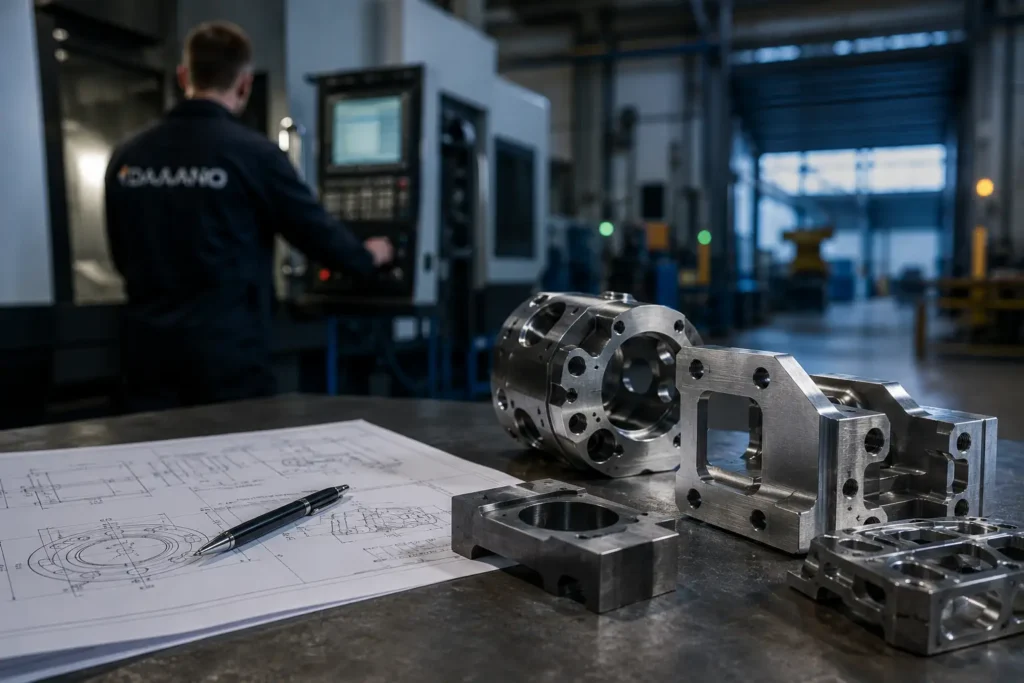
CNC machines, or numerically controlled machine tools, are the foundation of modern production of precision metal components. Their greatest advantage is the ability to produce parts with extremely high accuracy and complete repeatability in mass production.
Numerical control allows the machining process to be programmed so that each subsequent part is manufactured according to the same parameters. The machine performs planned operations with high stability, eliminating the variability typical of manual machining. This allows for maintaining micrometric accuracy, repeatable dimensions, and consistent quality throughout the entire batch.
In military production, repeatability is strategically important. Components must fit together, maintain their intended geometry, and function as designed. Even a small difference in detail can impact the assembly, durability, or safety of the entire system.
CNC machining helps reduce the risk of such deviations. With properly developed technology, a supervised process, and regular measurement inspections, it's possible to achieve consistent quality in both short, specialized series and larger production batches.
Therefore, CNC is a key technology for the defense industry. It provides the precision, repeatability, and predictability required for the production of military components.
Reinforcement Subcontractor: Material Traceability
One of the most important requirements in military production is material traceability. This means that each component must have a clearly defined origin, an assigned material batch, and documents confirming its parameters. In the case of metal components, a metallurgical certificate is particularly important.
A steel mill certificate confirms the chemical composition, mechanical properties, and compliance of a material with a specific standard or specification. This is a critical document for the defense sector, as it ensures that the component was manufactured from a material with the appropriate strength parameters.
In practice, traceability means that the subcontractor must know:
- what material a given detail is made of,
- what batch the material came from,
- what metallurgical certificate is assigned to a given batch,
- when and in what process the detail was made,
- what quality controls were performed,
- who was responsible for the individual stages of production,
- what measurement results were obtained during acceptance.
Such documentation allows for complete control over the process and provides the customer with assurance that the component meets technical requirements. In military procurement, lack of traceability can be as significant a problem as manufacturing errors. The component itself must be accurate, but its production history must also be traceable.
Dajano: Advanced Metalworking for the Military
Dajano is a competent partner in advanced metalworking for demanding industries, including the defense sector, specialized industries, and dual-use projects. Our experience, technological resources, and focus on quality allow us to implement projects that prioritize precision, repeatability, and accountability at every stage of production.
In the production of components for the military, two Dajano values are of particular importance: quality and flexibility.
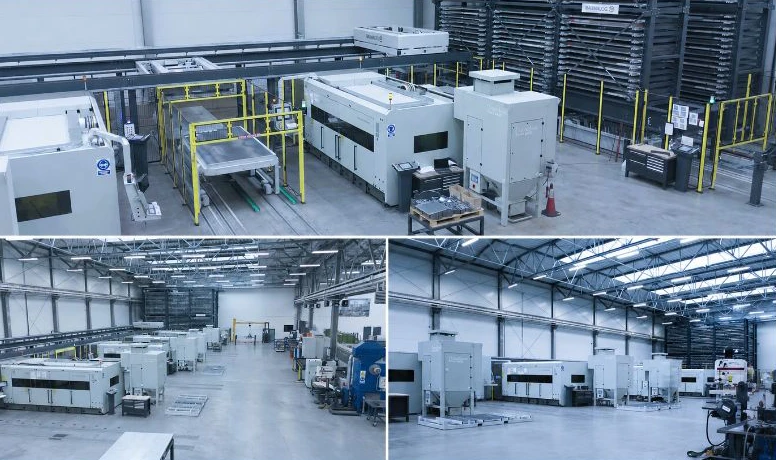
Quality is based on modern, robotic machinery, which allows for stable production parameters and high repeatability of details. Automation and controlled technological processes reduce the risk of error and help meet the requirements of clients from strategic industries.
Flexibility means the ability to implement challenging, non-standard projects. Dajano can tailor its production process to specific technical documentation, material requirements, short runs, repetitive production, or projects requiring a customized engineering approach.
As a subcontractor for the defense industry, Dajano supports clients not only with component manufacturing but also with a technological approach to production. We analyze documentation, select the appropriate process, and ensure that the finished part meets quality and performance requirements.
Frequently Asked Questions (FAQ)
How is AQAP 2110 different from ISO 9001?
ISO 9001 is a civilian quality management standard used across a wide range of industrial and service sectors. AQAP 2110 builds on ISO 9001 requirements but expands them with additional NATO requirements specific to the defense sector. These include quality planning, risk management, supply chain oversight, materials traceability, configuration management, and documentation of product compliance with contract requirements.
Why is CNC crucial in military production?
CNC is crucial in military production, ensuring extremely high precision and repeatability of details. Numerical control allows components to be manufactured according to technical specifications, while maintaining tight tolerances and stable production parameters. In the military sector, each component must function predictably, fit together with other components, and meet acceptance requirements, making precise CNC machining critical.
How does Dajano ensure production quality control?
Dajano ensures quality control through a supervised production process, advanced machinery, analysis of technical documentation, control of processing parameters, and verification of finished components. Robotic stations and modern technologies ensure high repeatability, while a flexible approach to projects allows for process adaptation to specific customer requirements.
Secure your supply chain with a Polish manufacturer
Collaborating with a local subcontractor is strategically important today. A Polish manufacturer of metal components can ensure faster response times, easier communication, greater process control, and reduced risks associated with an international supply chain.
For the defense industry, manufacturers of specialized systems, and companies implementing dual-use projects, a local technology partner translates into greater operational security. The ability to quickly consult documentation, efficiently implement changes, and flexibly adapt production to project needs is a real advantage in demanding contracts.
Dajano supports clients in the production of precision metal components, where quality, repeatability, and process responsibility are paramount. If you're looking for a subcontractor to complete a demanding project for the defense sector or specialized industries, submit your technical documentation for a quote.
Contact Dajano and see how we can secure your supply chain with domestic, advanced metal processing.
How helpful was the article?
Click a star to rate!
Average rating 0 / 5. Number of votes: 0
No votes so far! Be the first to rate this article.
 Polski
  English (UK)
  Français
  Čeština
  Svenska