

Challenges of internal logistics in the automotive industry
Supply chain complexity and component rotation
The automotive industry is characterised by complex supply chains and frequent parts turnover. Components must be delivered on time, often on a just-in-time basis. Any delay or error in transportation can lead to production downtime. Therefore, warehousing and internal logistics must be as efficient and disruption-proof as possible.
Variety of parts
Manufacturers, such as the brake pad supplier, handle many vehicle models and production platforms. Each type of pad, housing or assembly component requires a different way of packaging, storage and transport. In-house logistics has to cope with a large variety of components with different dimensions, weights and transport safety requirements.
Why are Gitterboxes the standard in automotive logistics?
Durability, load capacity and stable construction
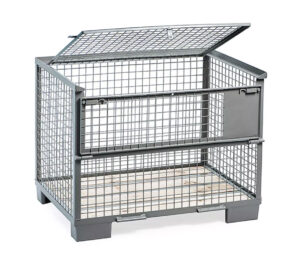
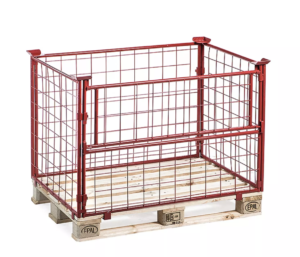
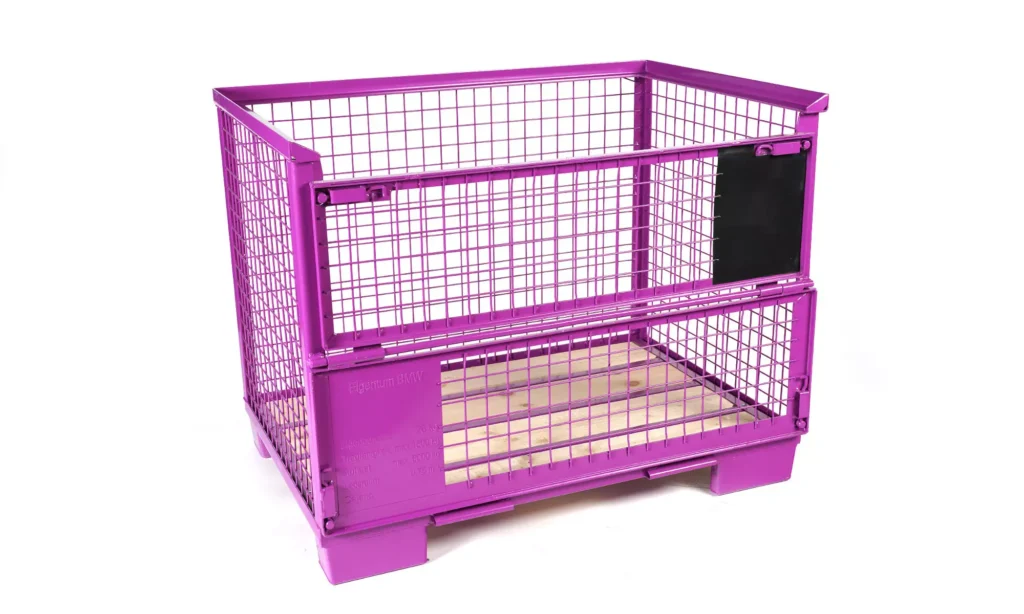
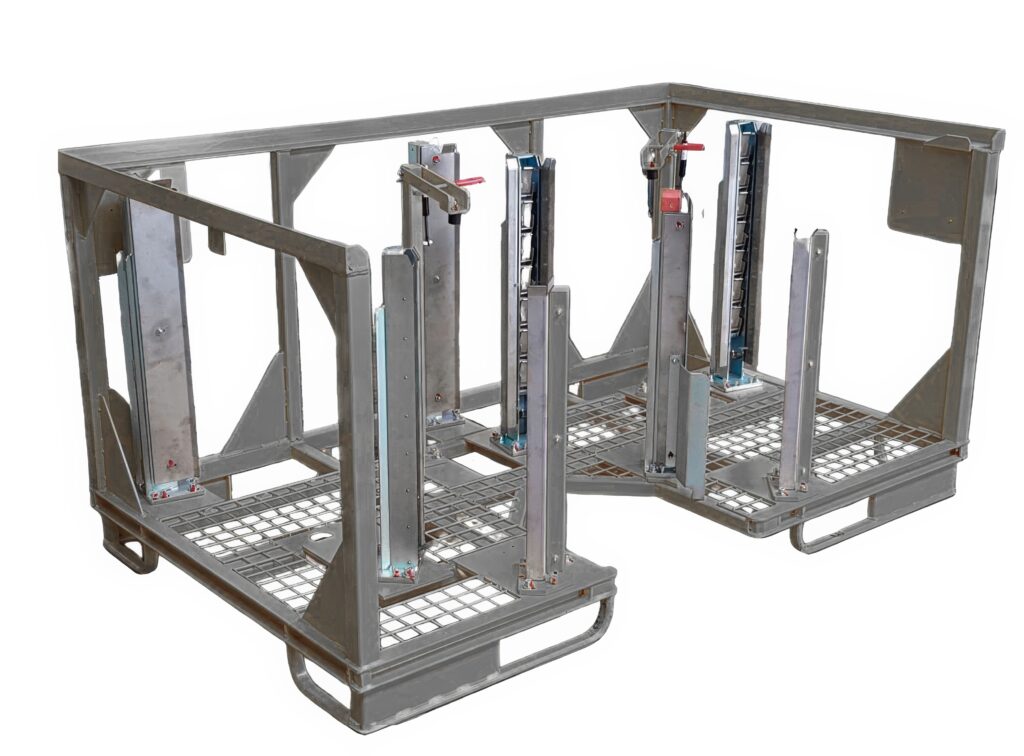
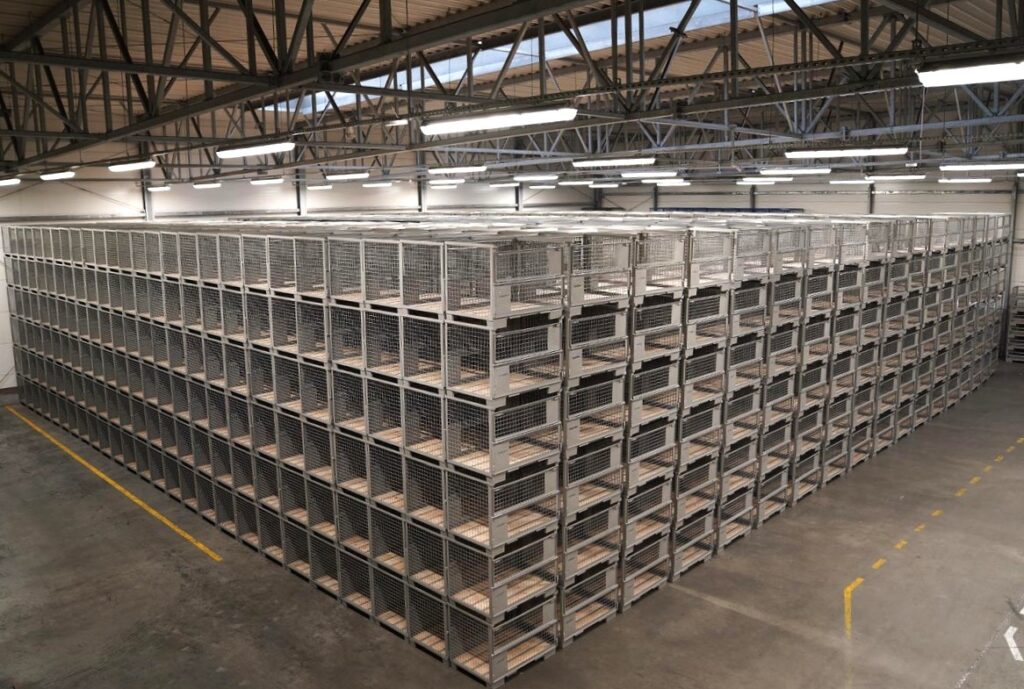
Gitterboxes are mesh containers made of metal, which are characterised by high strength and load-bearing capacity. They are resistant to mechanical damage and can be used in a reusable cycle. They are ideal for heavy components as well as those with irregular shapes.
Easy identification of contents
The mesh design allows a quick visual check of the container's contents. In addition, Gitterboxes can be easily labelled with plates, stickers or printed QR codes - making it easy to control and manage stock in warehouses.
Compatibility with transport and racking systems
Thanks to their standard dimensions, Gitterboxes are compatible with most material handling systems and warehouse racks. They can be easily moved with forklifts and stacked on top of each other, which contributes to space efficiency.
How do Gitterboxes optimise storage and transport?
Space-saving thanks to stackability
The ability to stack containers on top of each other without risking damage to the contents is a major advantage. In the case of a brake pad manufacturer, this has reduced storage space requirements by more than 20%.
Safe storage of parts
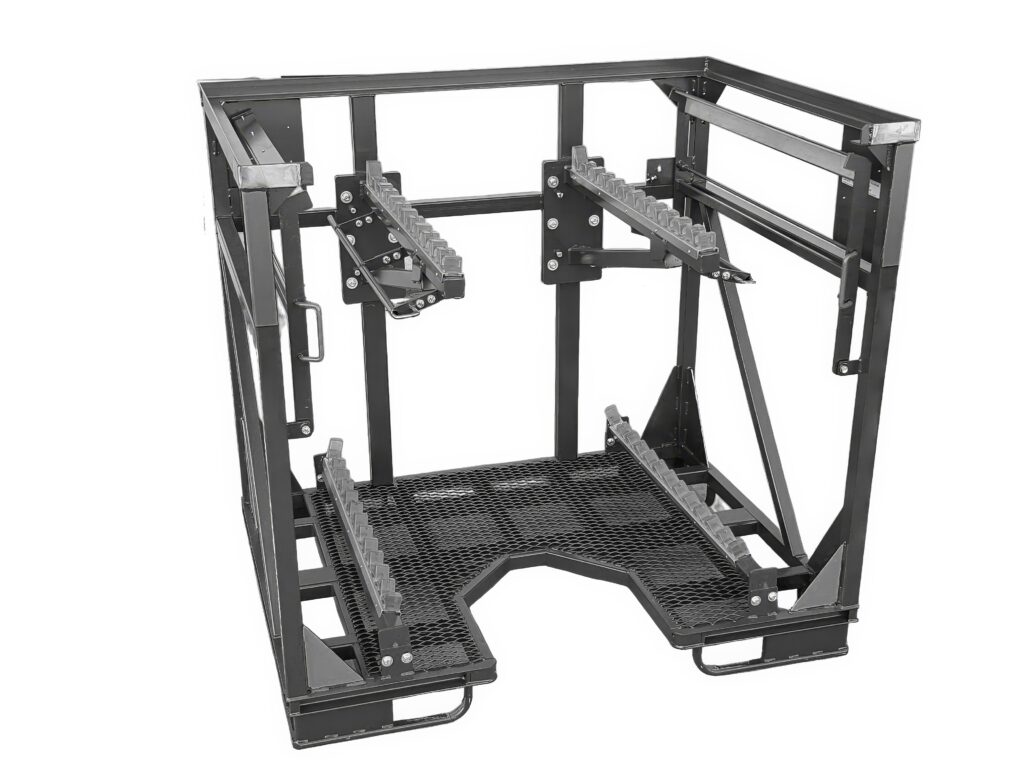
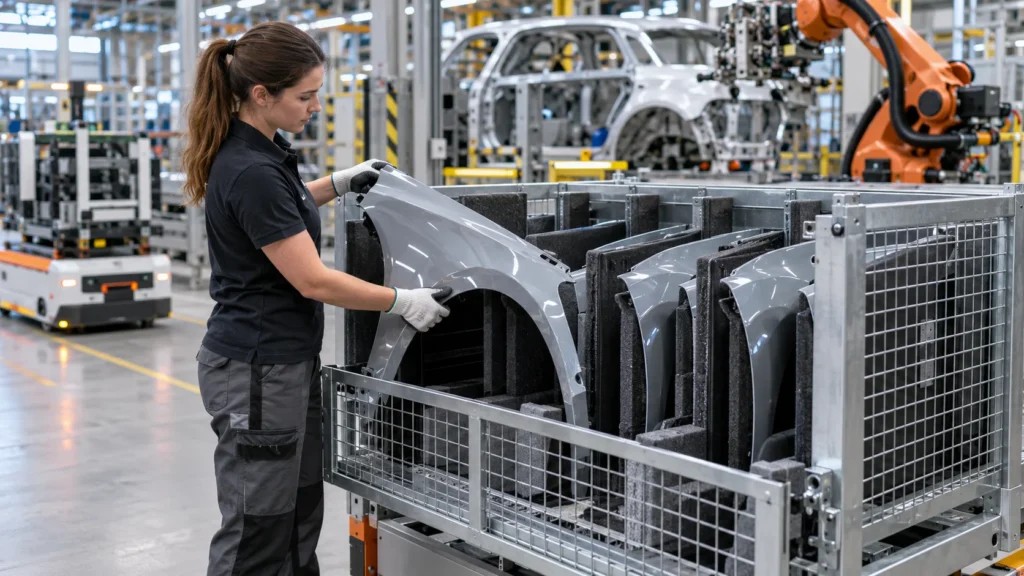
The robust design of the Gitterboxes protects parts from crushing, scratching or vibration during transport. Suitable inserts and internal compartments enable even delicate components to be stored safely.
Facilitating loading, unloading and order picking
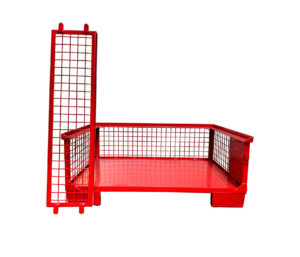
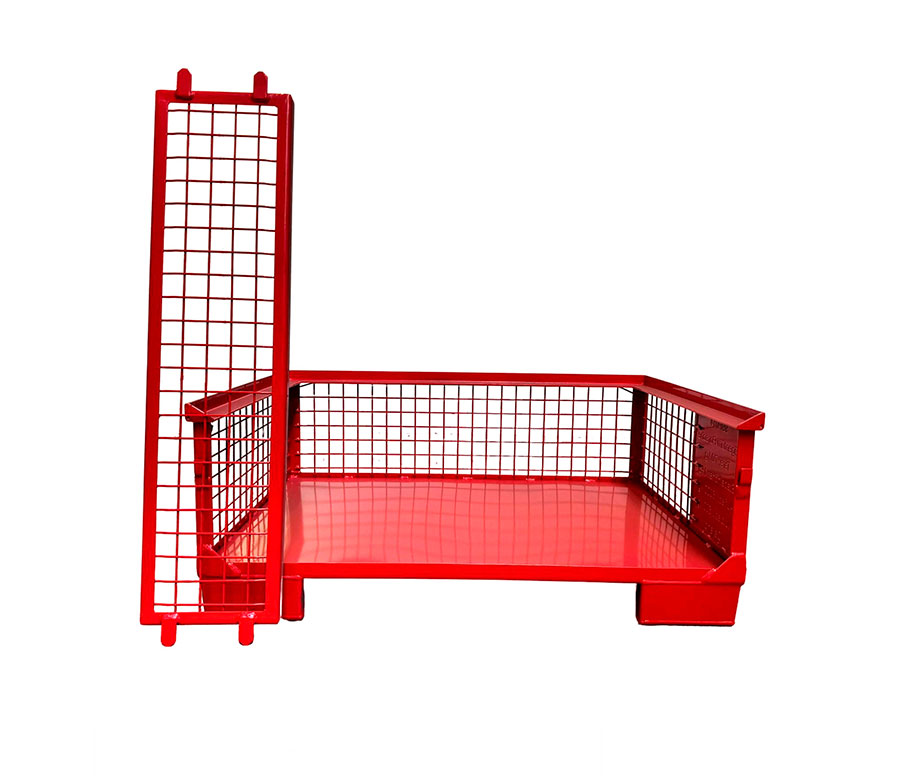
Gitterboxes fitted with flaps allow easy access to the contents without having to remove them from the racks. This facilitates picking and reduces the time it takes to prepare components for dispatch or delivery to the production line.
Bespoke gitterboxes tailored to automotive processes
Dimensions, handles, flaps and other personalisation elements
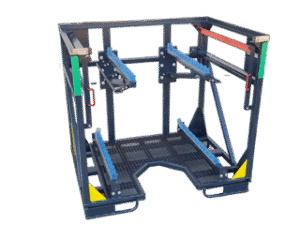
Gitterboxes tailored to specific requirements were designed for the German brake pad manufacturer: with additional handles, reinforcements and double flaps. This allowed faster handling and better adaptation to production processes.
Possibility of integration with warehouse automation
The gitterboxes were equipped with RFID tags, so they were integrated into the WMS system. Automatic gates recorded the movement of containers between zones, allowing full control over the flow of materials.
Colours and markings according to customer systems
The ordered containers had colours corresponding to specific production zones. Permanent markings facilitated identification and flow management within the plant and during quality inspections.
Examples of the use of gitterboxes in the automotive industry
Storage of engines, transmissions and heavy components
Gitterboxes are ideal for storing large and heavy components. Their design allows components requiring high stability to be stored safely.
Transport of small components between production halls
In the plant in question, Gitterboxes were used to move smaller components. Thanks to the use of special inserts, the risk of damage during transport was eliminated.
Use in reverse logistics
Once emptied, the containers are cleaned and returned for reuse. This reduces packaging costs and waste. Gitterboxes are the ideal solution for circular logistics.
Gitterboxes in the automotive industry - Frequently asked questions
Which Gitterboxes are most commonly used in automotive applications?
The most popular models are UIC 435-3 compliant - durable, metal and compatible with transport systems.
Is it possible to order Gitterboxes tailored to a specific production line?
Yes, we offer full customisation options: from dimensions to flap types to colours and markings.
What certifications do automotive containers meet?
Strength certification and compliance with industry standards, e.g. UIC 435-3, are required. Gitterboxes can also be tested for compatibility with automation.
Are Gitterboxes suitable for international transport?
Definitely yes - they are used in road, rail and sea transport. Their durability makes them ideal for pooling systems.
How long does it take to complete an order for automotive containers?
Standard models are available within a few weeks. Bespoke containers usually require 6-10 weeks, depending on the degree of personalisation.
How helpful was the article?
Click a star to rate!
Average rating 5 / 5. Number of votes: 3
No votes so far! Be the first to rate this article.
How helpful was the article?
Click a star to rate!
Average rating 5 / 5. Number of votes: 3
No votes so far! Be the first to rate this article.
 Polski
  English (UK)
  Français
  Čeština
  Svenska