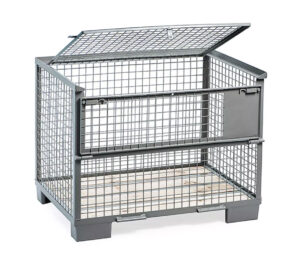
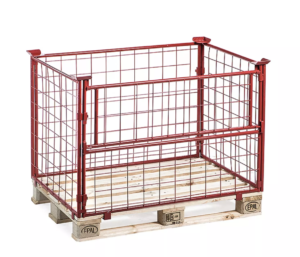
Order mesh container (e.g. a typical Gitterbox) is a decision that can have a significant impact on warehouse efficiency, transport costs and the sustainability of logistics solutions. Before you decide, it is worth paying attention to the key aspects that determine whether a container will meet expectations - below are the five most important considerations.
1. what will you use the container for?
Identify the type of cargo and storage conditions
The first step should always be to think about what you intend to store and transport:
- Are they heavy goods, metal components, machine components or light and delicate products?
- Will they be exposed to shocks, impacts?
- What are the conditions in the warehouse (humidity, temperature, chemicals)?
- Will the container be used indoors or outdoors under varying conditions?
The choice of container must take into account material properties, mesh construction, corrosion protection and mechanical resistance.
Different industries - different needs
Different sectors have different requirements:
- In automotive production, containers must be highly resistant and often comply with EPAL / UIC standards.
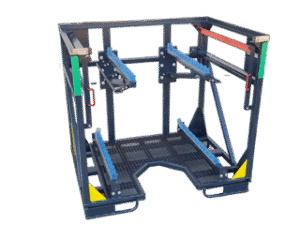
- In the white goods and electronics sectors, it is important to protect sensitive components and to be able to adjust the partitions.
- In e-commerce, general cargo logistics, containers are often exposed to intensive handling and the speed of manipulation.
- In warehouses for raw materials or metal components, contact with oils, filings, moisture must be taken into account.
Check out our special containers tailored to different industries.
2. What dimensions and load capacity will be optimal?
Standard sizes versus bespoke design
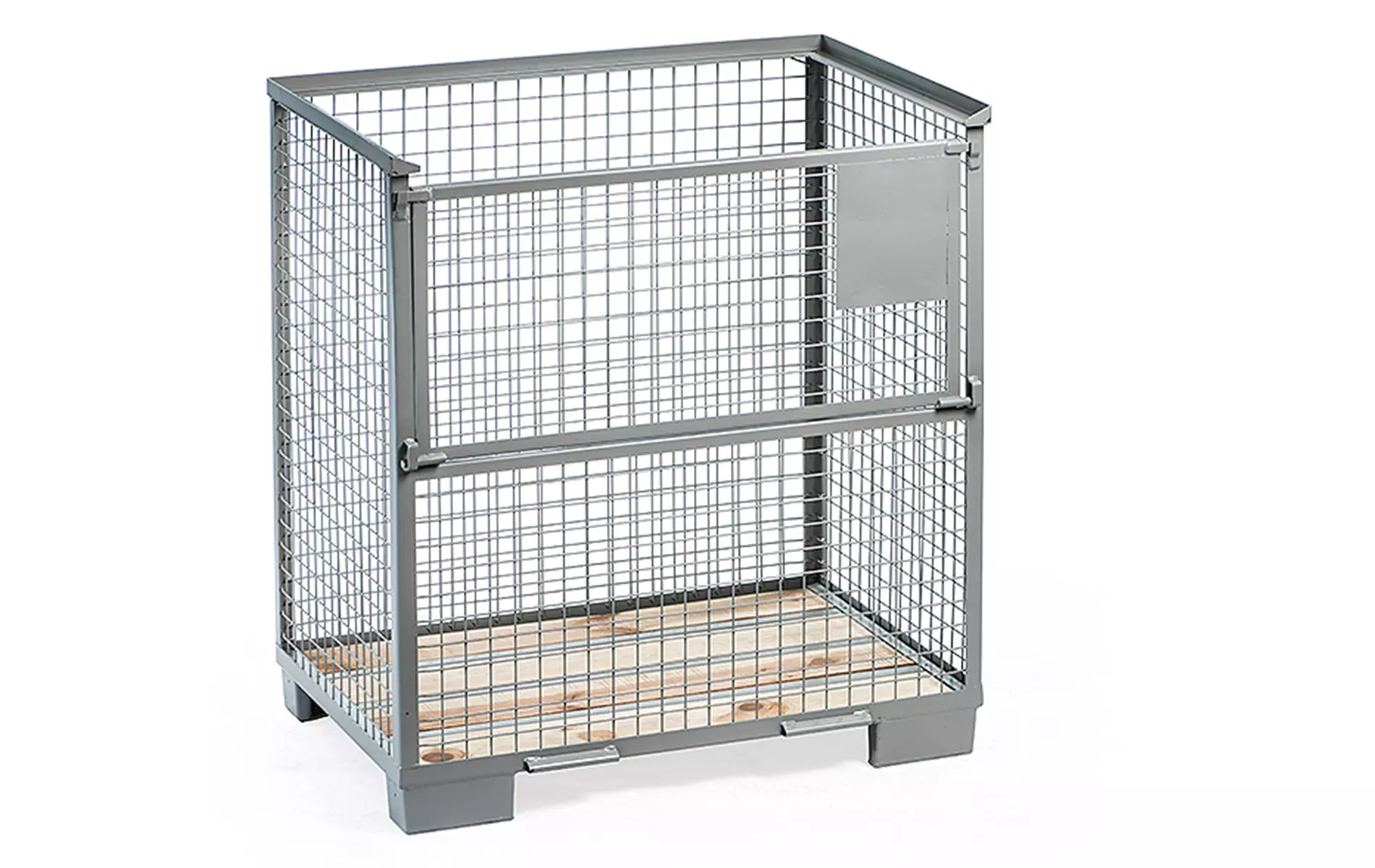
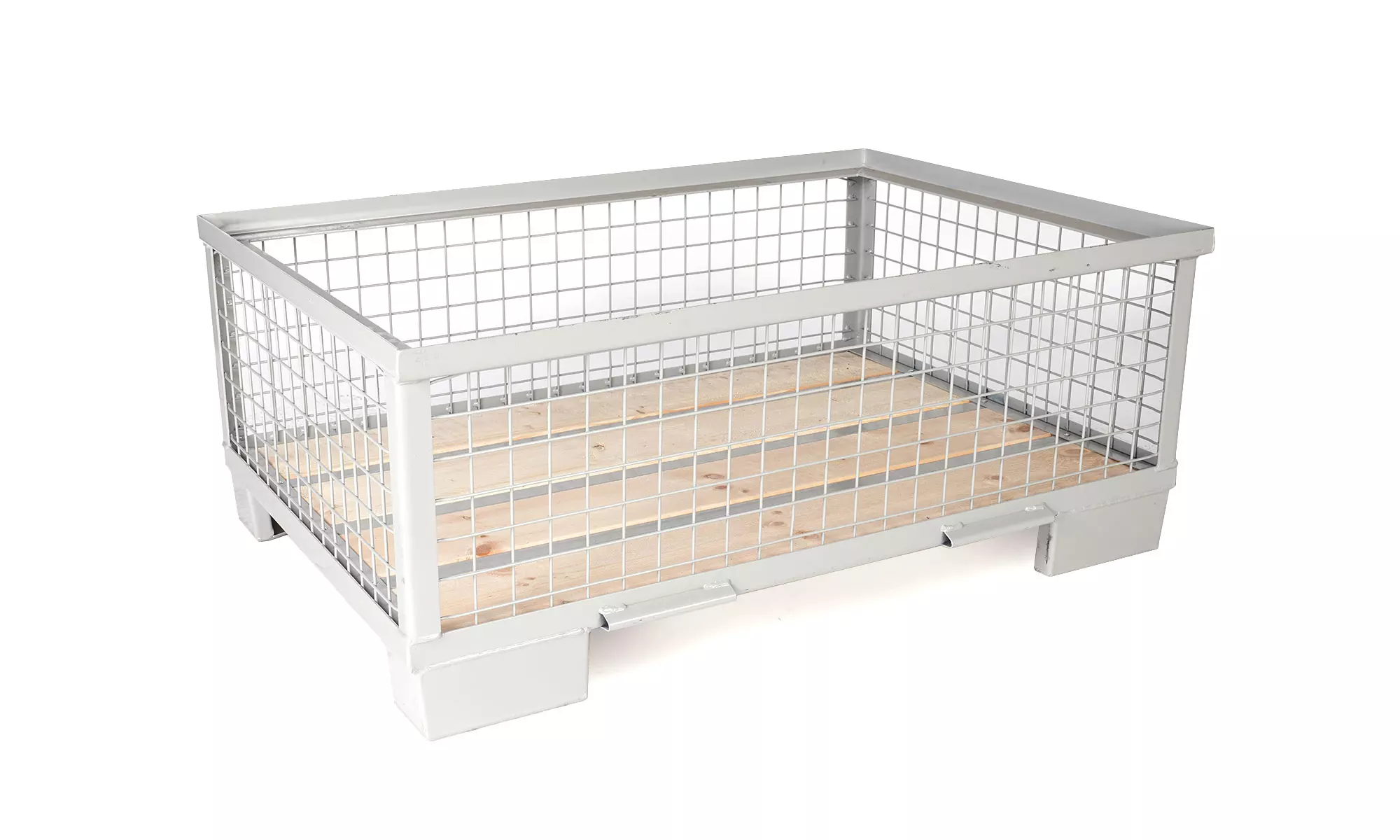
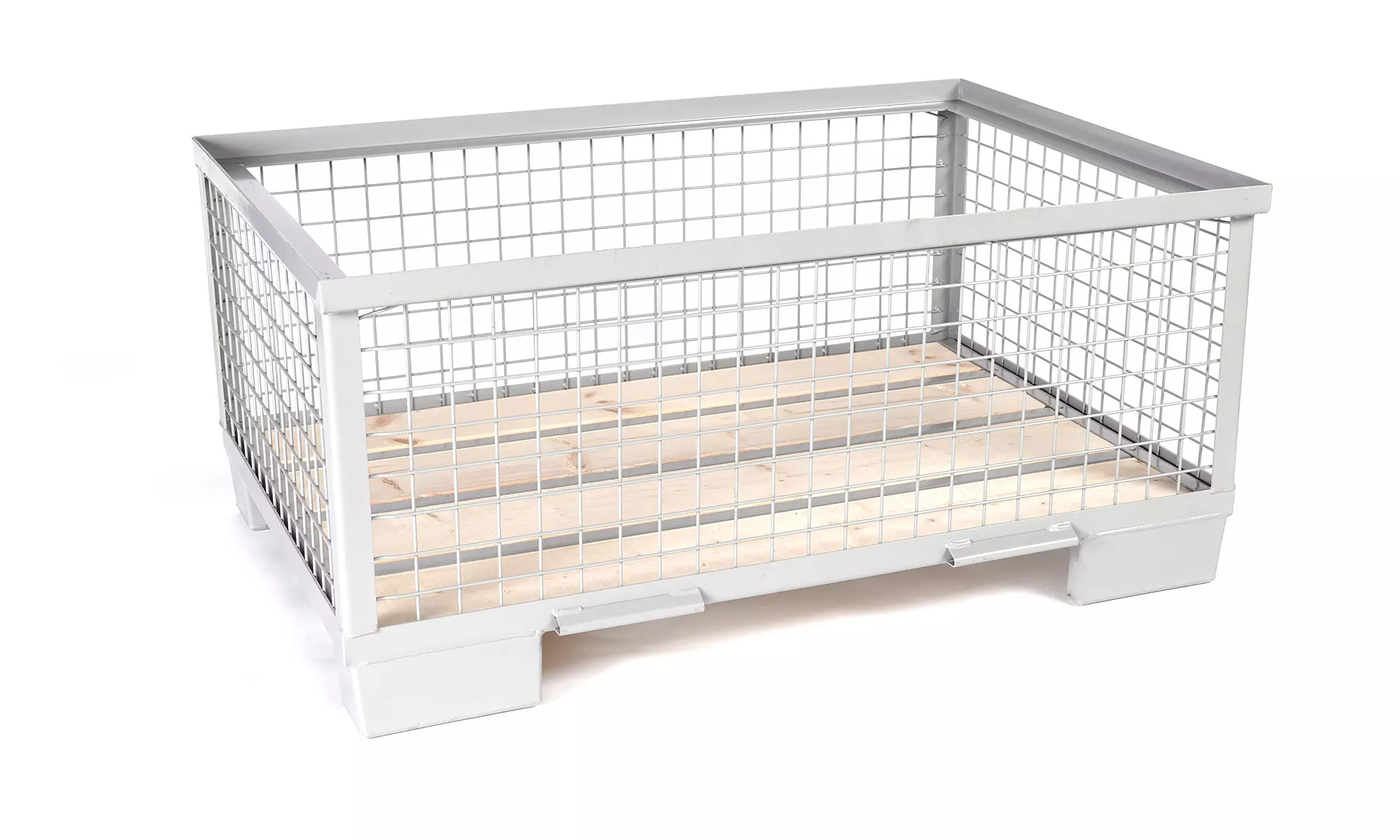
There are standard mesh containers on the market (e.g. 1240 × 835 × 970 mm external) - UIC 435-3 or EPAL-compliant versions.
But a standard solution may not fit into your warehouse layout, shelving or transport routes. In this situation bespoke design allows you to adjust the length, width and height to suit your needs.
Importance of material capacity and strength
Key parameters:
- Load capacity - how many kilograms the container will support under static and dynamic conditions,
- Thickness of steel profiles - The thicker the profiles, the greater the bending and impact resistance,
- Quality of welds and joints - poor welds are a frequent point of failure, especially under heavy use
- Protective coatings (galvanised, powder-coated) - to protect against corrosion and wear in contact with moisture and chemicals.
Poor material selection or underestimated load-bearing capacity can lead to deformation, failure and costly repairs.
3. is the container to be collapsible, stackable or mobile?
Space-saving and efficient logistics
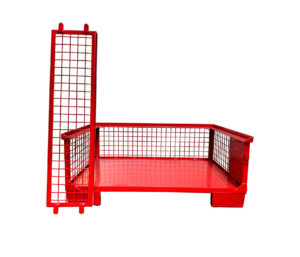
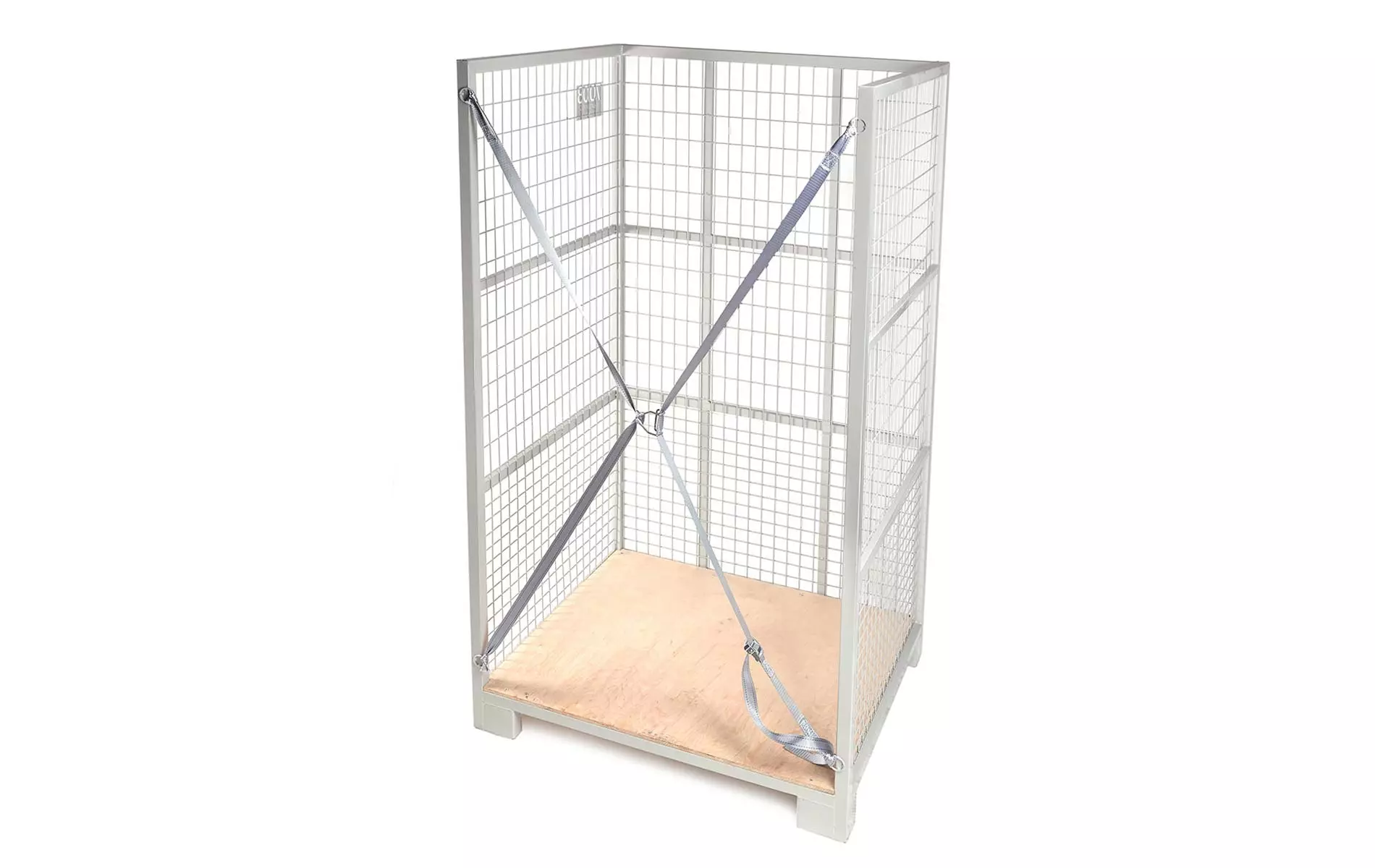
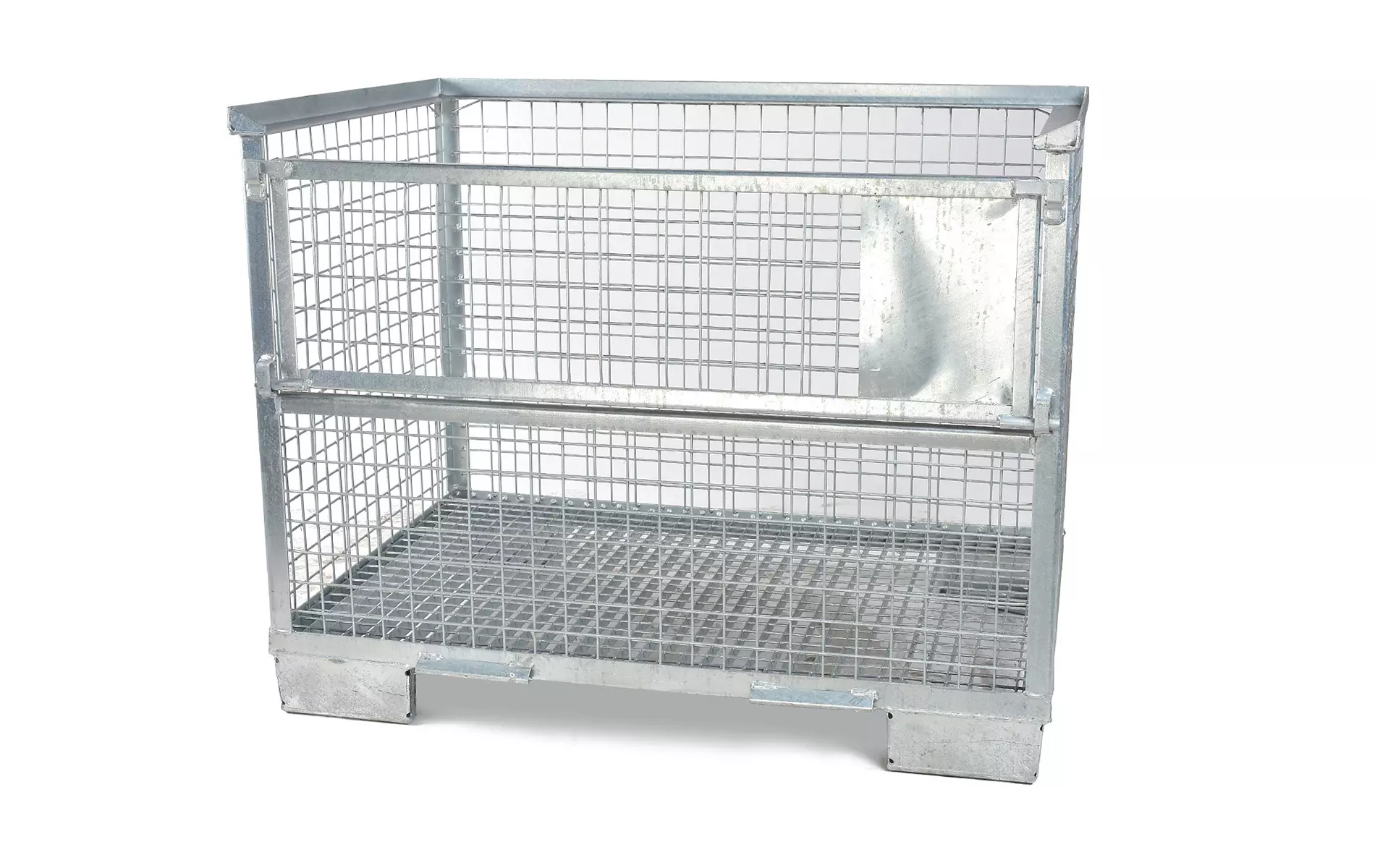
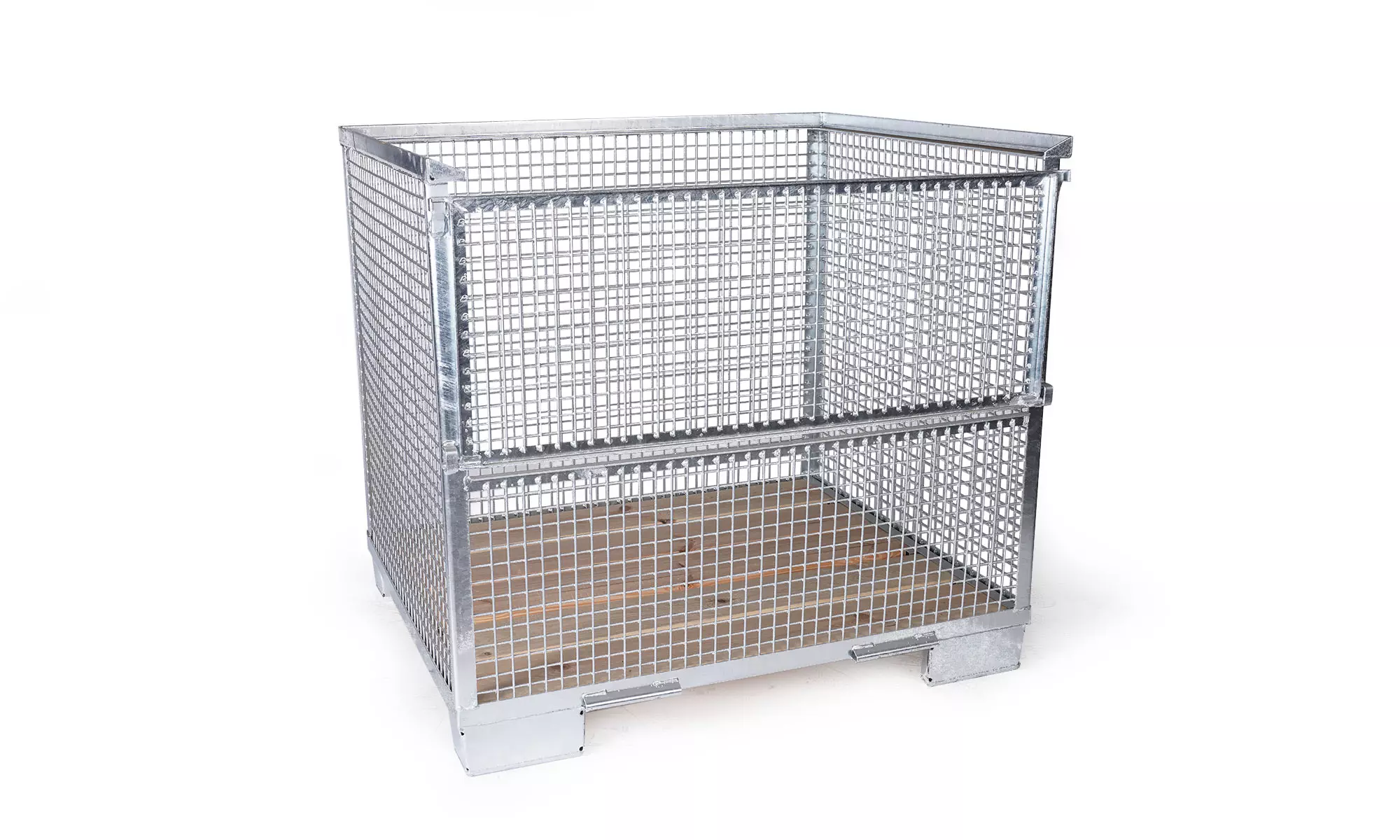
An empty container takes up space - which is why collapsible (folding wall) or semi-collapsible structures are very practical. They save storage and logistical space. In many offers, Gitterboxes are foldable, which reduces the transport volume of empty units.
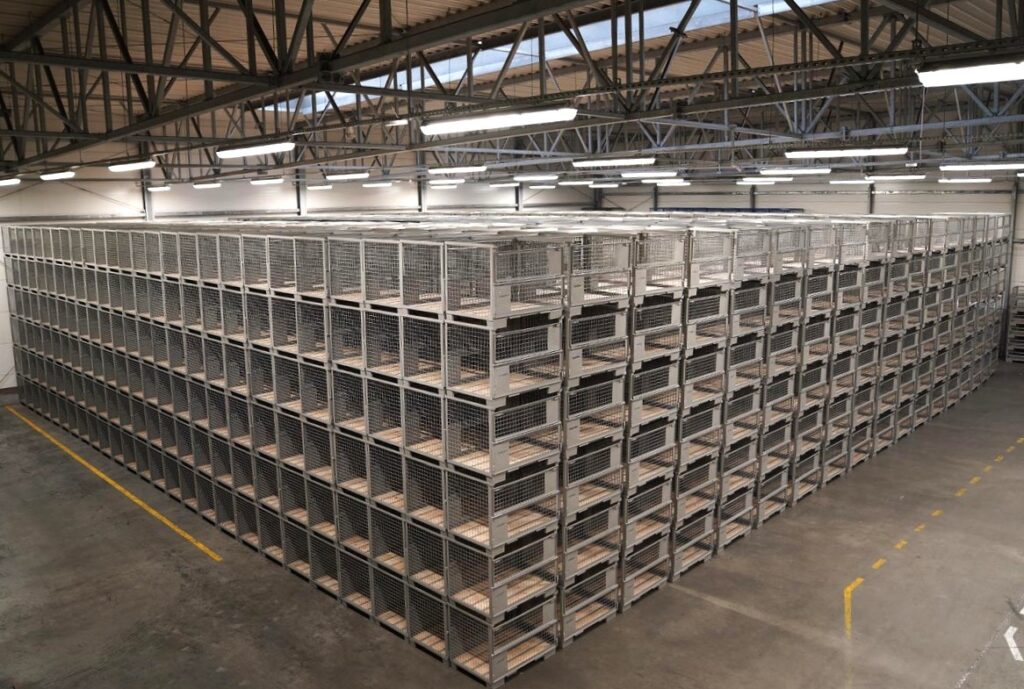
Stacking (stacking of containers on top of each other) is another important feature to maximise the use of vertical space. The design should ensure stability when stacked, even when fully loaded.
Compatibility with trolleys and racks
The container must be compatible with the transport and racking system:
- suitable profiles or forklift spaces,
- dimensions adapted to the racking sockets,
- the possibility of working with roller conveyors, sensors or transport robots,
- front flaps or doors that allow access to the contents without removing the container from the pallet.
4. what additional elements are worth considering?
Doors, flaps, catches, colour or logo personalisation
Good equipment is not just about the load-bearing structure - a variety of add-ons increase functionality:
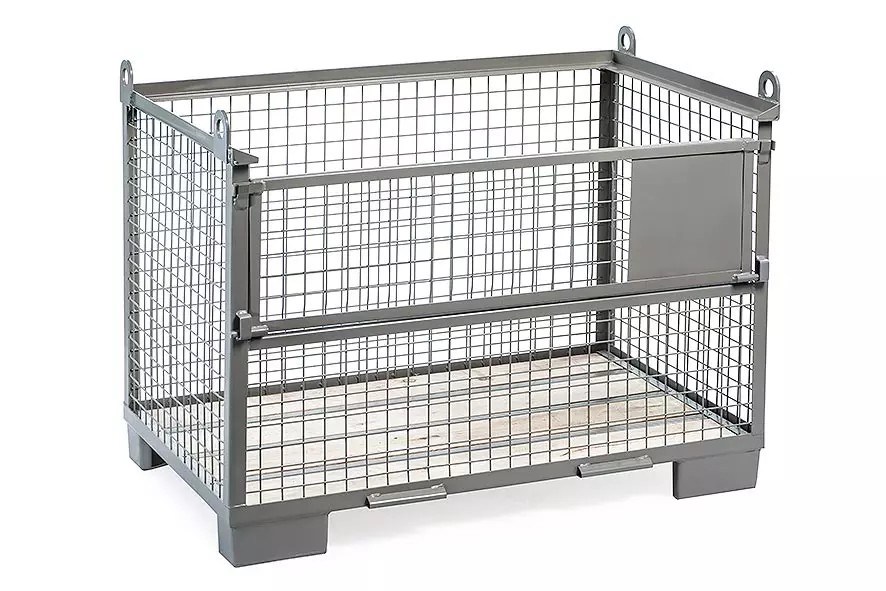
- side or front flaps - make it easy to access goods without having to remove the container,
- doors with locks - for security and content locking,
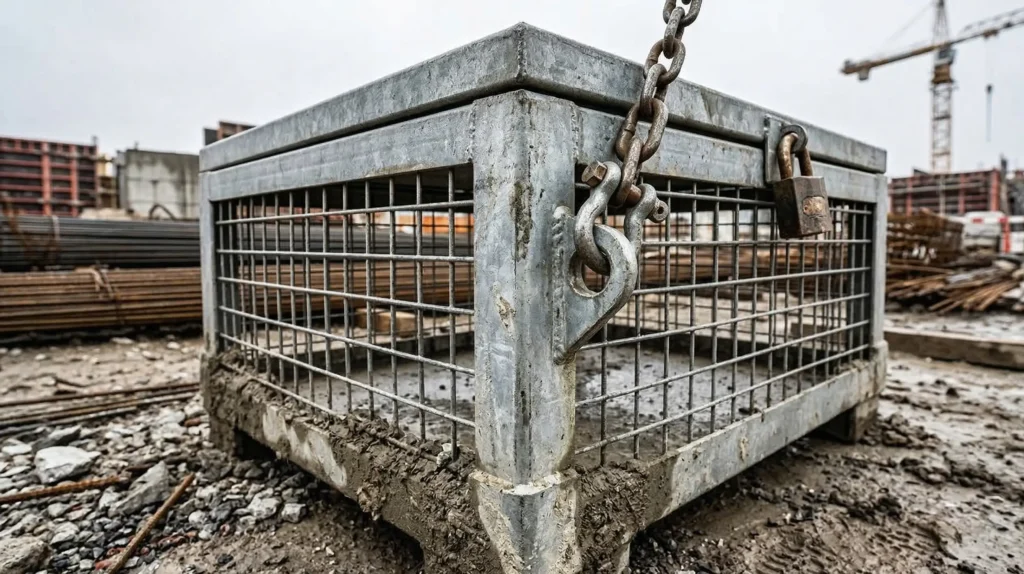
- hooks, hooks, holders - for crane transport, suspensions or mountings,
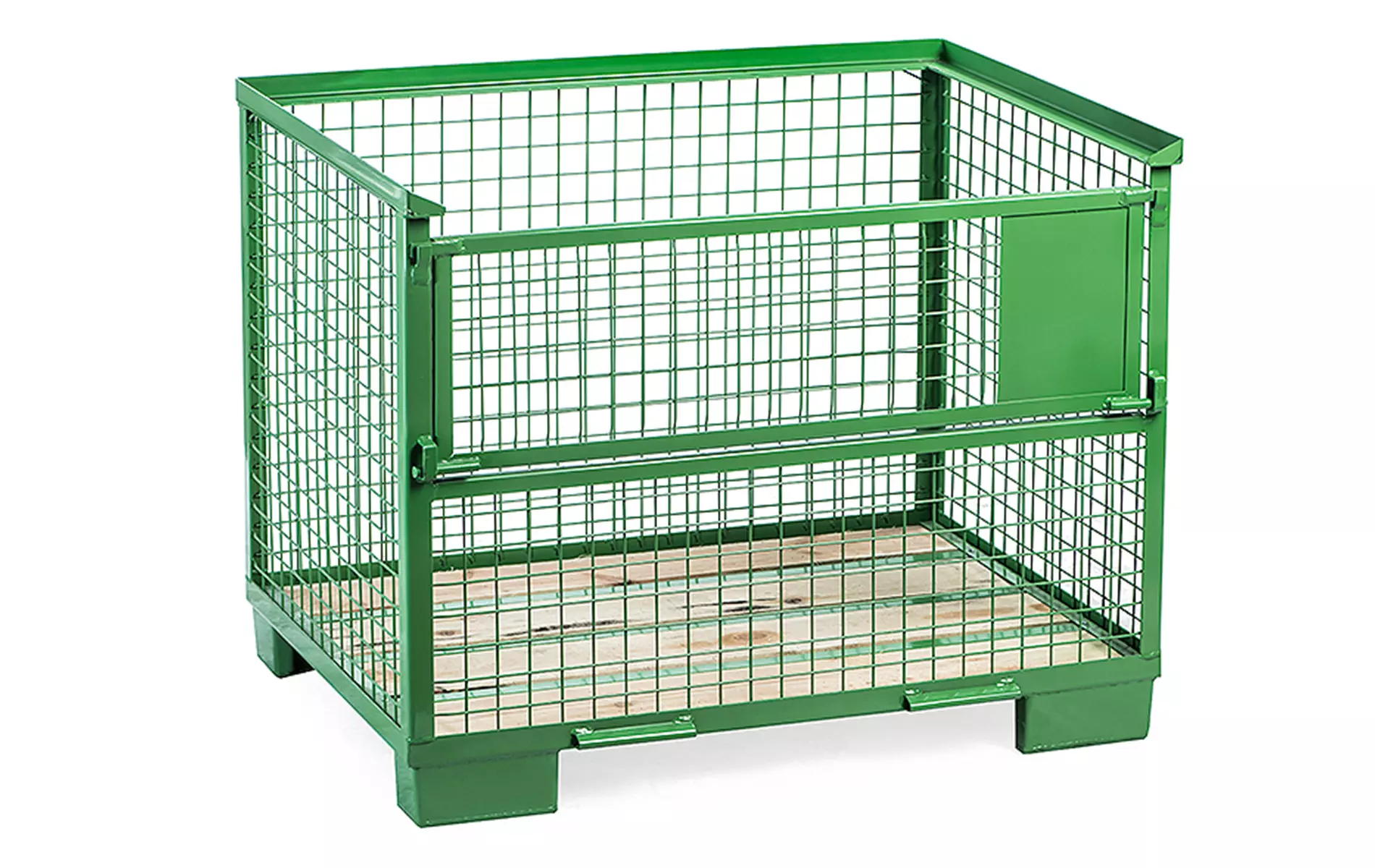
- RAL colour, logo, markings - identification, batch numbering, storage areas (e.g. powder-coated containers in company colours)
Signage to make warehousemen's work easier
- printing with barcodes, QR codes, unit numbers - increase efficiency and control,
- labels or an information panel on the container,
- colour coding for quick identification of zones or types of load.
5. What to look for when choosing a manufacturer?
Experience, advice and quality of service
A good manufacturer should:
- offer technical advice - assistance in design selection, needs analysis, simulations,
- have experience in the manufacture of mesh containers and be familiar with industry standards,
- be able to perform prototype or trial batch, so that the customer can check the fit in a real environment.
Certificates, guarantee, possibility of trial orders
- quality certificates (e.g. ISO), load bearing documentation, compliance with standards (EPAL, UIC) - if required,
- manufacturer's guarantee,
- the possibility of ordering, for example, a single test piece before a full batch - to ensure that the design is optimal.
Expert comment:
„We often see that customers choose mesh containers purely on the basis of price, overlooking structural aspects, the strength of the welds and material properties. Meanwhile, it is these elements that determine whether a container will survive years of intensive use. It is worth investing in a manufacturer that carefully analyses the customer's specifications and selects components with a safety margin.”
- Kamil Chenczke, DAJANO Construction Department
How do you order a container to suit your needs?
Working with Dajano step by step
- Initial interview and needs analysis - client communicates dimensions, load, working conditions.
- Conceptual design and visualisation - the client can see what the container will look like and can make comments.
- Pricing and negotiation - material, construction, additives, coating, quantity.
- Production - cutting, welding, assembly, surface finishes (powder coating, galvanising).
- Quality tests, load control, technical documentation.
- Delivery and after-sales support (e.g. modifications, spare parts).
Technical consultation and customised implementation
DAJANO offers engineering consultations, customised design, prototypes and unit or batch production, taking into account quality standards and possible industry norms. Contact us and discuss your project today.
Frequently asked questions before purchasing a mesh container
Can one test container be ordered?
For batch production only - many manufacturers allow a single test piece to be ordered so that the customer can check the fit before purchasing a large batch.
How long does it take to process an order?
Time depends on the complexity of the project and the availability of materials - usually from a few weeks (2-6 weeks) in the case of bespoke construction.
Can I choose the colour or designation?
Yes - RAL colour, logos, prints, barcode or numbering markings are all elements that can usually be included in an order.
What forms of payment and delivery are available?
- payment: prepayment, advance payment, payment upon delivery,
- Delivery: transport standard, special, pallet - packing and securing for transport are usually included.


 Polish
  English
 French
 Czech
Czech
 Swedish